 EN
EN ES
ES FR
FR RU
RU
You’ve been together for several months, things are serious, and the invitation has arrived — dinner with her family in Russia or at her parents’ apartment abroad. For many Western men in intercultural relationships, few moments carry as much weight. This guide covers everything you need to know before, during, and after that first visit.
Why Family Is Central to Russian Culture
In many Western countries, family relationships have become increasingly optional — warm but peripheral to adult identity. A grown child who moves to another city, sees their parents twice a year, and makes all major decisions independently is not seen as unusual or cold.
In Russia, the family unit operates differently. It is not a backdrop to adult life — it is one of its central organizing structures. This isn’t about dependency or lack of independence. It’s about a genuine cultural belief that major life decisions — who you marry, where you live, what you build — are made in dialogue with the people who know you most deeply.
For a Russian woman in a serious relationship, her parents’ opinion of her partner is not a formality she has to manage. It is information she actively needs. Their blessing — even if she doesn’t strictly require it — matters to her because it affirms that her choice integrates into the larger fabric of her life. A partner her family actively dislikes creates a friction that Russian women typically don’t accept silently and indefinitely. This family-first mindset is also why understanding the Russian family structure and its cultural codes matters well before the first dinner, not after.
Understanding this shifts the entire frame of the first meeting. You are not there to “pass a test” in the way a job interview works, where strangers assess your competence. You are being invited into something much warmer and much more loaded simultaneously — you are being offered a tentative place in a close human circle, and the family is watching whether you understand how to inhabit that place with grace.
To understand the full psychology behind this family-centric worldview, reading about Russian women’s traits and the role of family values in intercultural relationships provides essential context before your visit.
Before You Go: What Your Partner Should Prepare You For
The most avoidable mistakes in a first meeting with a Russian family are avoidable precisely because your partner is the one person with complete intelligence on the situation. Use her.
Before the visit, ask her directly:
About the family dynamic: Who is the decision-maker in the household — her mother or her father? Who is she closer to? Are there siblings, grandparents, or other relatives who will be present? What are the family’s values around formality, religion, tradition?
About sensitivities: Are there topics that are painful or volatile in this family specifically? A father’s health, a difficult period in their past, a sensitive relationship between family members? These are not always political — they can be deeply personal.
About logistics: What time will the meal happen, and how long does it typically last? What is the dress code expectation in her family’s home? Is this primarily a meal, or will there be activities (a walk, games, watching together)?
About the food: If you have dietary restrictions, this conversation needs to happen well before you arrive. A Russian mother who has spent three days cooking for a guest does not take politely to discovering at the table that her guest cannot eat the main dish. Inform, apologize warmly, and offer genuine alternatives.
About her role: Ask your partner whether she plans to translate actively, or whether she expects you to navigate primarily through gesture and goodwill. Both can work — but knowing in advance reduces the anxiety of silence.
Your partner has navigated both cultures. She is your best resource and your most valuable ally. A first meeting that feels like a solo mission when you had a guide available is a missed opportunity — if you met her through a structured introduction, a Russian marriage agency can often brief you on family expectations before the trip, and the editorial team at rencontrefemmerusse.com documents how intercultural first meetings with Russian families typically unfold in practice.
Gifts That Work — and Gifts That Offend
Arriving empty-handed to a Russian home for a first meeting is a significant misstep. Gift-giving is a language of respect and attention, and the way you bring gifts — the selection, the wrapping, the presentation — is read carefully. If you’re preparing for this step, our step-by-step guide on how to find a Russian bride through a reputable agency covers the etiquette that leads up to this first family visit.

For the mother:
Flowers, always. The rules: fresh, real flowers — not plastic, not dried, never from a petrol station. The number must be odd (3, 5, 7, 9) because even numbers are associated with funerals. Color carries less strict symbolism than in some cultures, though white and yellow flowers are sometimes associated with parting or grief by older generations — warm reds, oranges, and pinks are safe. Present them directly to her when you arrive, before sitting down.
For the father:
A quality bottle — wine, cognac, or whisky — is almost universally appropriate. If you know his preferences, honor them. If you don’t, a mid-range French cognac or a recognizable Scotch whisky signals that you’ve made an effort without over-spending in a way that feels performative. Avoid cheap supermarket bottles; the label matters to him.
For the household:
A box of quality chocolates, imported pastries, or a specialty food item from your country makes an excellent general gift. It also creates an immediate conversation point — “these are from a small chocolatier in Lyon, I thought you might enjoy them” is an easy, warm entry into connection.
What to avoid:
Knives, scissors, or anything with a sharp edge — they symbolize severing a relationship in Russian superstition. Clocks carry associations with time running out. Handkerchiefs suggest grief. These aren’t universal convictions, but an older family may feel the resonance even if they laugh about it.
Do not over-gift. A man who arrives with an enormous bouquet and multiple expensive bottles looks like he is trying to buy approval rather than earn it. Thoughtful and appropriate beats lavish.
Arriving at the Russian Home: The First 20 Minutes
The first twenty minutes of a first visit are disproportionately important. They set the emotional tone for everything that follows.
At the door:
Remove your shoes. Russian homes expect this — there will almost always be slippers (tapochki) provided for guests, or at minimum a clear visual cue near the entrance. Not removing your shoes is a notable social failure. Remove them without being asked.
Greet everyone present with a handshake if they are adult men, and with a light handshake or nod if they are women — unless a woman extends her hand first, in which case take it. Do not kiss Russian relatives on greeting unless they initiate. Maintain eye contact when you greet; avoiding eye contact reads as evasive or disrespectful.
Present your gifts at the door, directly to the relevant person. The flowers to the mother, the bottle to the father. This is a moment — a small ceremony — and it should feel like one. A brief sentence: “I brought these for you — I heard you love roses” or simply “I wanted to bring something for your home.”
The early conversation:
The first minutes will involve some degree of looking at each other, offering drinks, showing you to the living room or the table. Tolerate the silence with warmth. You don’t need to fill every second. Commenting genuinely on the apartment — “what a beautiful room” or “I love the photographs” — is appreciated. Asking about an object or a photograph opens a conversation organically.
Sit where you are directed. Don’t sprawl or make yourself excessively comfortable before you’ve been there long enough to earn that ease.
At the Table: Toasts, Vodka, and Knowing When to Say No
The Russian dinner table is a social institution. It is not a place you eat at — it is a place where relationships are formed, tested, and cemented. Understanding its rhythms is essential, and if the family’s cooking wins you over, our interview with a chef on mastering Russian cuisine to win over your in-laws goes much deeper into the dishes themselves.
Toasts:
The first toast is a ritual. No one drinks before the first toast is raised, typically by the host (usually the father or the eldest male). Wait. When the toast comes, raise your glass, maintain eye contact with the person speaking, and when the toast concludes, say “za vas” (to you) or simply join in the clink and drink.
Toasts will recur throughout the meal. Each one is an opportunity for genuine warmth. If at some point you are invited to offer a toast yourself — and you may well be — keep it personal and sincere. “To this family, who raised the woman I am in love with, and to this evening, which I’ll remember for the rest of my life” lands better than any clever or formal formulation.
Vodka:
Russian families vary enormously on the role of vodka at the table. An urban Moscow family in 2026 may serve primarily wine. A family from a smaller city or with more traditional customs may serve vodka as the primary spirit and expect participation.
If you don’t drink vodka, say so gently and early: “I rarely drink spirits, but I would love to join the toast with a small glass” or “I’ll have wine, if that’s alright — I want to remember every moment of this evening.” Said with warmth and a smile, this is almost always graciously accepted. What is not graciously accepted is covering your glass silently, or drinking your toast with juice without acknowledging it.
Eating:
Accept everything that is offered, at least once, and in visible portions. A Russian mother who has spent days preparing food experiences a guest who barely eats as a kind of rejection. You don’t need to eat until you are uncomfortable — but eat enthusiastically, comment on specific dishes, and accept second helpings when pressed. “Ochen vkusno” (very delicious) is the most useful phrase you can learn before arriving.
Topics to Avoid (and Where the Conversation Can Safely Go)
Firmly avoid:
Politics. The relationship between Russia and the West, the situation in Ukraine, NATO — none of these topics lead anywhere productive at a first meeting. Even if family members raise them with an opinion, deflect with warmth: “I’m not the right person to talk geopolitics — I’m here to get to know your family, not debate world affairs.”
Comparative criticism. “In France, we do things differently” or “I find it interesting that Russians don’t do X” — these comments, however neutral in intent, land as condescension. This is not a seminar; it is a dinner. Curiosity is welcome; evaluation is not.
Money and income. Asking what someone earns, how much the apartment cost, or what their financial situation is comes across as intrusive in most Russian families, particularly at a first meeting.
Anything that implies Russia is backward or inferior. Even subtle framings — “I was surprised to see how modern Moscow is” — can land poorly if they imply that modernity was unexpected.
Safe territory:
Ask about her childhood stories they remember. Ask what the father is proud of professionally. Ask about the city or region the family is from. Talk about food — its history, its variations, its meaning to the family. Talk about your own family with warmth and honesty. Mention places in Russia you’ve read about or hope to visit.
If you know a few words of Russian, use them freely and without embarrassment. Being wrong is charming. The attempt to speak their language is itself a form of respect.
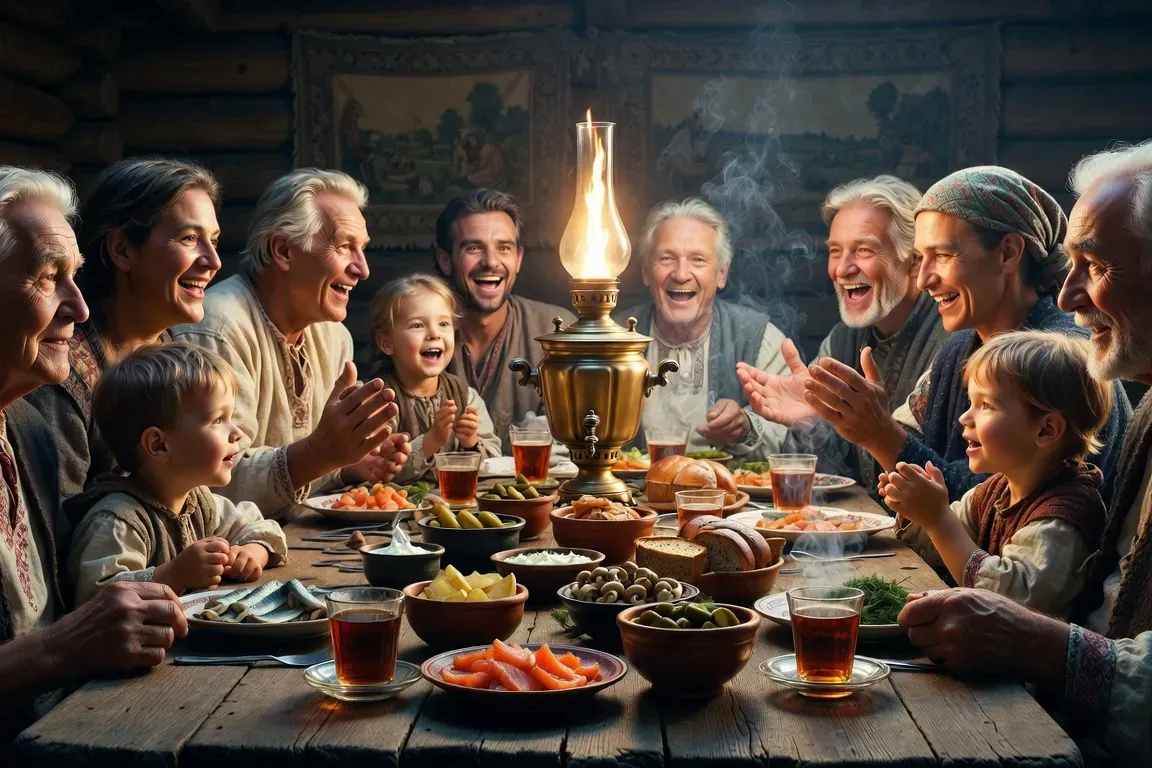
Connecting With the Babushka: No Russian Required
If your partner’s grandmother is present — the babushka — she may be the most important person in the room in terms of long-term family influence, and she is also likely to be the one with the least English.
The absence of a common language is not an obstacle to connection. It is an opportunity to demonstrate something rarer and more valuable than linguistic fluency: genuine warmth without words.
Sit near her at some point during the evening. Accept whatever she offers — a piece of cake, a refill, a sweater because she thinks you look cold. Eat it visibly and gratefully. When she speaks to you through your partner, look at her — not at your partner — while she speaks, and respond in the same direction.
Learn to say “spasibo” (thank you) and “ochen vkusno” before you arrive. These two phrases, deployed at the right moments, will accomplish more than a paragraph of translated explanation.
Babushkas, in particular, respond to physical presence and attentiveness. A man who sits near her, who doesn’t check his phone, who laughs at the right moments and treats her as the matriarch she is — that man will be discussed warmly the following morning.
Her approval may be the most durable approval in the family.
What the Family Actually Wants From You
Behind the cultural codes, the gifts, and the toasts, Russian families in this situation want to know several things that have nothing to do with nationality.
They want to know you are serious. Not necessarily about marriage imminently — but serious about their daughter as a person. A man who talks about her with specificity and affection, who references things she has told him about her family, who is clearly attentive to who she is — that man signals seriousness without having to make speeches about it.
They want to know you will take care of her. This doesn’t mean financially, necessarily, though it can. It means: are you someone who pays attention? Who notices when she is tired, who handles problems without panic, who is reliable? They are watching your behavior toward her throughout the evening for evidence of this.
They want to know you respect their culture. You do not need to love everything Russian, adopt every custom, or pretend there are no differences. You need to approach those differences with curiosity and respect rather than amusement or dismissal.
They want to like you as a person. This is often forgotten. Russian families are warm, generous, and social. They are not auditors. They want to find reasons to like you. Make it easy for them by being genuinely present — not performing a role, but actually interested in the people around the table.
If you’re thinking seriously about the next steps in your relationship, understanding the full timeline — from meeting the family through to marriage formalities and the K-1 fiancée visa process — gives the visit more context and helps you have informed conversations about the future.
The Day After: Reading the Signs After a First Visit
The morning after is when the real assessment happens — among family members, over tea, in the conversations your partner may or may not relay to you.
Positive signs:
Her mother calls or messages your partner quickly. Her father asks a follow-up question about something you mentioned. You receive an invitation to a future event — a birthday, a holiday gathering, a Sunday meal. Any of these signals genuine acceptance and not just tolerance.
Your partner is relaxed and warm. If the evening had created anxiety or disappointment, she would likely be processing it visibly.
Signs to read carefully:
Silence is not necessarily negative — families sometimes take time to form a shared view. A family that is enthusiastic but non-committal the same evening may discuss privately and reach a warmer conclusion the following day.
A specific, gentle concern raised by your partner — “my mother found you a little quiet” or “my father mentioned you seemed nervous” — is not a failure report. It is information, offered because she wants the relationship between you and her family to grow. Take it as such.
What to do next:
Send a message — through your partner, or directly if you have the ability to communicate — thanking the family for the meal and the warmth. A simple, sincere message (“I was moved by your welcome, and the meal was extraordinary”) sent the next day is a gesture that many Western men overlook and that Russian families notice and appreciate.
Discuss with your partner about when to visit again, and under what circumstances. Integration into her family life is not a single event — it is a process. The first dinner opens the door. What you do with it depends on the consistency and patience you bring to the relationship over time. If the relationship eventually reaches the point of a formal engagement, our interview with a notary on finances and patrimony for Franco-Russian couples covers the practical questions families often raise once the relationship becomes serious.
If the relationship is heading toward engagement, reading about how to propose to a Russian woman and what her family expects from that moment will help you time and approach that step with the cultural intelligence it requires. For couples who go on to marry, our guide on raising children in a Franco-Russian household and navigating bilingual education picks up the story well beyond the first family dinner.
Frequently Asked Questions
What gifts should I bring when meeting my Russian girlfriend's family for the first time?
Flowers for the mother (odd number, always — even numbers are for funerals), a quality bottle of wine or cognac for the father, and chocolates or pastries as a general house gift. Avoid cheap supermarket flowers. If you know her mother collects anything specific, a thoughtful niche gift shows genuine attention.
Is drinking vodka mandatory when meeting a Russian family?
Not mandatory, but refusing entirely can feel abrupt. A polite 'I drink very little but I'll join the toast with a small glass' is almost universally accepted. Many Russian families, especially urban and younger ones, serve wine, beer, or juice alongside vodka. Never start drinking before the first toast is raised.
What topics should I avoid at the dinner table with a Russian family?
Avoid politics (especially Russia-West tensions and Ukraine), comparative judgments ('in my country we do it differently'), personal income or finances, and any criticism of Russian culture or food. Safe topics: your genuine curiosity about Russia, your admiration for their daughter, family traditions, travel, music, and food.
Do I need to speak Russian to make a good impression?
Not at all — but learning 5-10 phrases (hello, thank you, delicious, cheers) makes an outsized impression. Russian parents typically find the effort far more meaningful than the result. A foreigner who says 'ochen vkusno' (very delicious) while eating borsch will be remembered warmly long after the dinner.
How should I dress for a first meeting with a Russian family?
Err on the side of formal. Russians, especially older generations, read dress as a signal of respect. A clean, well-fitted shirt or blouse, polished shoes, and no athletic wear. This applies equally to women meeting a Russian boyfriend's family. First impressions are taken very seriously.
What does the family actually evaluate during the first visit?
Primarily: your respect for their daughter, your seriousness of intent, your manners at the table, and your interest in them as people (not just obstacles to clear). They are also watching whether you treat their daughter with attentiveness — small gestures like pulling out her chair or asking for her opinion in front of them matter enormously.
How soon after meeting the family should an engagement happen?
There is no fixed rule, but most Russian families expect some signal of serious intent — return visits, genuine integration into family events — before an engagement. A single visit followed by a proposal several months later is not unusual, provided those months included real relationship with the family.