 EN
EN ES
ES FR
FR RU
RU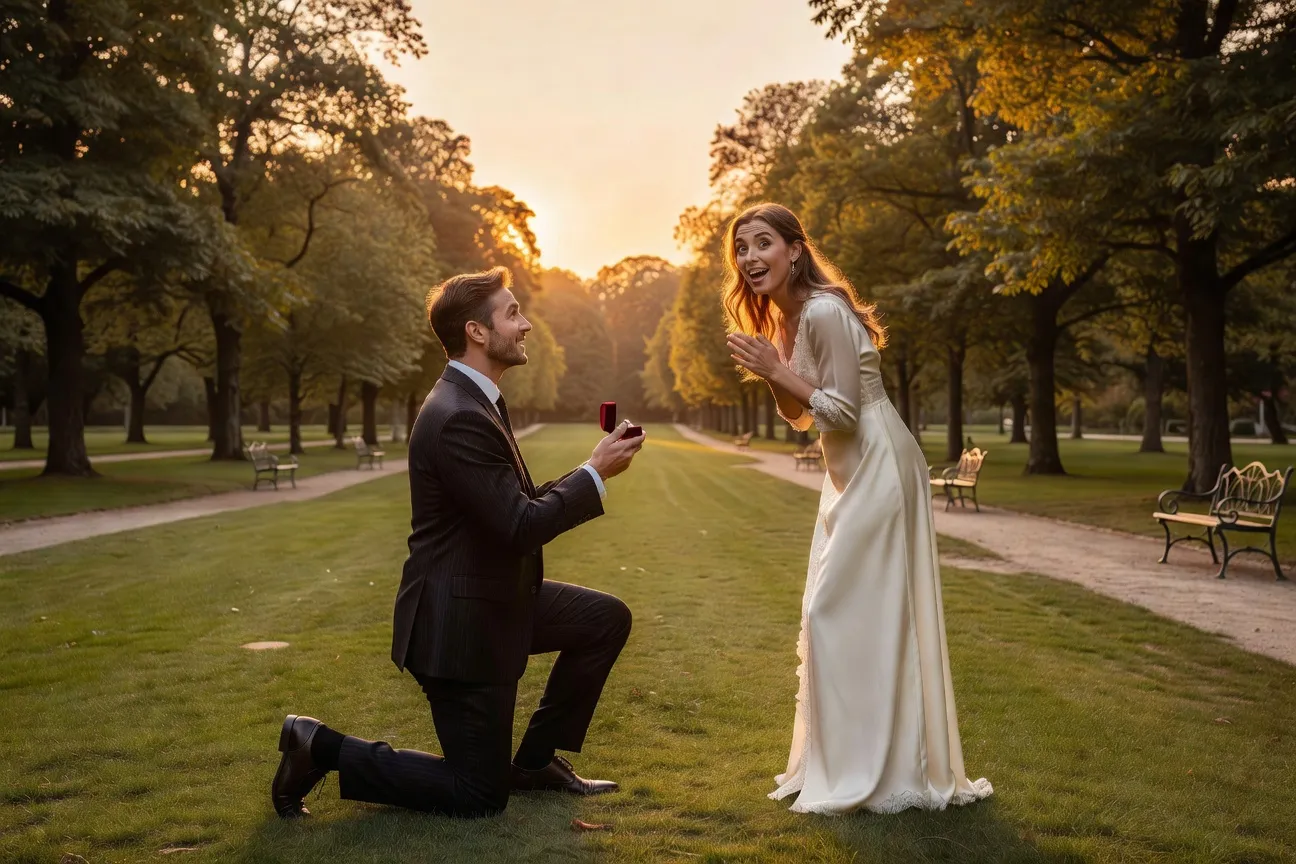
Emma Laurent, editorial journalist for BrideInRussia, speaks with Dr. Katia Volkov — clinical psychologist at the ‘Lien d’Est’ practice in Lyon, France. Born in Novosibirsk and living in France since 2008, Dr. Volkov has spent 16 years working with Franco-Russian and international couples navigating the specific pressures of intercultural marriage. Over the course of this interview, she addresses one of the most frequent questions she hears in her consultation room: how do Western men propose to Russian women — and why do so many of them get it wrong?
Why Do Western-Style Proposals Often Fail With Russian Women?
Emma Laurent: Dr. Volkov, let’s start with the elephant in the room. In your practice, how often do you see proposals that have gone wrong before a couple even gets to the wedding?
Dr. Katia Volkov: More often than most men would expect. Concretely, I’d say roughly one in three couples I see with early relationship tensions traces at least some of that tension back to the engagement phase — and specifically, to a proposal that didn’t land the way the man intended.
The issue is never the nationality. I want to be very clear about that. A poorly handled proposal is almost always about a mismatch of expectations around what a proposal means. For Russian women, the proposal isn’t just a question. It’s a declaration. It’s a man saying, in front of the world: “I have chosen you, specifically, and I know why.” When Western men treat the proposal as a logical progression — “we’ve been together for a year, it makes sense to get engaged” — that’s when it goes flat.
I’ve had clients who planned elaborate proposals: trips to Paris, restaurant reservations, a beautiful ring. And the woman still felt something was missing. When they came to see me, the man was baffled. He’d done everything “right.” But he’d rehearsed what to do and not what to say. His proposal was logistically perfect and emotionally hollow.
Russian women, particularly those raised in a culture where love is expressed grandly and verbally — through poetry, toasts, explicit declarations — need to hear why they are the one. Not “I love you.” That’s given. They need “I love you because you are the most direct person I’ve ever met, and because you make me want to be a better man.” That specificity is what transforms a pleasant question into a memory.
For context, this goes back to early reading of the Russian orthodox wedding traditions guide — a culture where every step of the marriage process, from the proposal to the ceremony, carries symbolic weight and is witnessed by the community.
What Role Does the Family Play in the Decision?
Emma Laurent: Let’s talk about the family dimension. Is it still expected for a man to speak to the parents first?
Dr. Katia Volkov: This surprises most men I meet — the answer is genuinely nuanced by generation and by geography. Let me give you an example from my practice. A French client, mid-40s, had been dating a Russian woman from Kazan for eighteen months. She was 38, a lawyer, completely independent. He called her father before proposing. The father was moved. The daughter was irritated — she felt infantilized.
Concretely, the rule today is this: for women under 35, especially those who have lived outside Russia for some time, the formal “asking permission” ritual is largely obsolete and can actually backfire. Women in that group have typically built lives where they make their own decisions. Treating the proposal as a transaction between men is patronizing.
However, and this is important: informing the family is still essential. There’s a meaningful difference between “asking permission” and “showing respect.” You can tell her parents you intend to propose, that you love their daughter, and that you’re hoping for their blessing — without making the decision contingent on their answer. That distinction lands well with almost everyone, including the most modern Russian women.
For older women or women who are closer to their family culturally — particularly those from smaller cities or more traditional households — involving the parents more formally can still be a genuine sign of seriousness. The key is knowing who you’re dealing with. If you’ve spent any time reading expert advice on dating a Russian woman, you’ll know that the spectrum of expectations inside Russia is enormous. A woman from Moscow in her 30s and a woman from a rural Ural city in her 40s may have very different readings of the same gesture.
Is There a Culturally Expected Timeline Before Proposing?
Emma Laurent: How long should a couple have been together before the proposal feels right?
Dr. Katia Volkov: The issue is never the nationality — but in this case, there is a pattern. From my 16 years of observation, Russian women tend to require a longer period of demonstrated commitment before they are ready to say yes with conviction.
Six months is generally the absolute minimum, and even that is fast. Twelve to eighteen months is more comfortable territory. The timing isn’t just about duration, though. It’s about milestones: has she met your family? Have you met hers? Have you traveled together, navigated a disagreement, seen each other under pressure? Russian women are astute assessors of long-term compatibility. They watch for consistency. A man who is charming for six months and then shows his true character on a stressful trip has failed a test he didn’t know was being administered.
I’ve had clients who proposed at three months because they felt certain. That’s not inherently wrong — sometimes the certainty is real and mutual. But the risk is that a Russian woman who accepts at three months is often doing so out of politeness or uncertainty rather than genuine conviction. And that ambivalence tends to surface later.
The timeline question also interacts with cultural anxiety: many Russian women are aware that Western men occasionally pursue Russian women for reasons that have little to do with genuine partnership. Being cautious about early proposals is partly a self-protective response to that awareness. Patience — visible, sustained patience — is one of the most powerful signals of serious intent.
Should You Speak to Her Parents First?
Emma Laurent: You’ve touched on this, but let’s be direct: what’s your concrete recommendation?
Dr. Katia Volkov: Concretely, I recommend the following approach for the majority of my clients. Before you propose to her, have a conversation with at least her mother — in person if possible, by phone if not. Keep it warm and genuine, not formal. Something like: “I wanted to tell you that I intend to ask Natalya to marry me. I love her very much and I’m hoping you’ll be glad.” That’s it. No negotiation, no permission-seeking. Just transparency.
Then, if her parents are present in her life and respected by her, see if you can arrange the ring presentation to happen in a context where both families are at least represented — even as witnesses the day after. This gives everyone a role without turning the proposal itself into a committee decision.
The cases where I’ve seen this go badly are usually: the man asks permission as though he’s purchasing property (condescending), or the man says nothing to anyone and the parents find out via an Instagram post (dismissive). Both extremes signal to the Russian family that the man hasn’t understood what family means in this culture.
The Engagement Ring: How Important Is It Really?
Emma Laurent: Let’s talk about the ring. Is there a level of expectation around this that Western men should be aware of?
Dr. Katia Volkov: Yes, but not in the way most men assume. The expectation is not about diamonds or carats. I’ve had clients who offered a very simple ring and the proposal was deeply moving. I’ve had others who offered an expensive ring and the proposal fell flat because the man presented it like handing over a receipt.
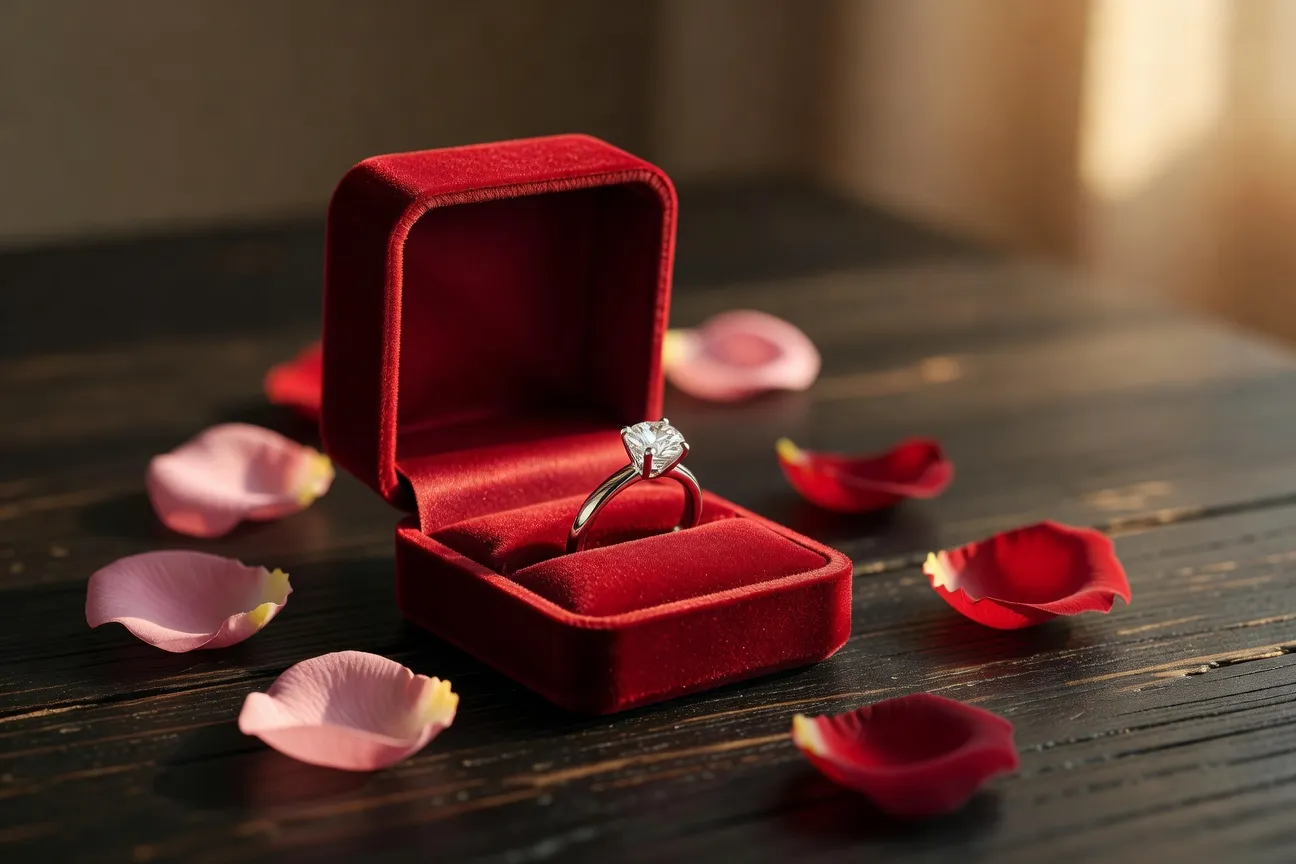
The expectation is about commitment to the gesture. For a Russian woman, the ring is the public symbol that the man is serious enough to have chosen something, to have prepared, to have thought about what she would want. The act of searching for and selecting a ring — not buying whatever is in the store window that day — says something. A real ring, presented in a real box, in a meaningful moment.
In Russian culture, the ring is traditionally worn on the right hand (the Orthodox tradition). If you give her a ring on the left hand thinking it’s universal, she may quietly move it later — or the symbolism may feel off. A small detail, but worth knowing.
Also: Russian women are perceptive about effort. If you’ve been wearing expensive clothes and taking her to restaurants all year, and then you hand her a ring that cost you almost nothing, she will notice. Not because she’s materialistic — in my experience, most Russian women are more practical about money than French women, frankly — but because she reads the proportionality of the gesture as a signal of how much she matters.

Public or Private Proposal — What Works Better?
Emma Laurent: What about the setting? Big public proposal or intimate private moment?
Dr. Katia Volkov: Let me give you an example from my practice. A 45-year-old Belgian client proposed in a restaurant in Nice, in front of about thirty people who had been briefed in advance to applaud. His girlfriend — 40, from Saint Petersburg — burst into tears and said yes. She also told me three weeks later that she’d wanted to kill him. She was mortified. Her private emotional response was being performed for an audience she hadn’t consented to.
The issue is never the nationality. The issue is that “public proposal” is a trend popularized heavily by American media, and it has spread globally — including among urban Russian women who’ve consumed the same content. Younger women (mid-20s to early 30s) who live in Moscow or Saint Petersburg and watch the same content as everyone else are more likely to find a public proposal romantic. Women who are more reserved, more private, or in their 40s are much more likely to feel exposed rather than celebrated.
The safest approach is a semi-private setting — a beautiful location you’ve chosen together, just the two of you, with the possibility of a celebration afterward with people who matter to both of you. That combination gives you the intimacy of a genuine moment and the communal celebration that Russian culture values.
How Do Diaspora Russian Women Differ in Their Expectations?
Emma Laurent: Does living in the West change these expectations significantly?
Dr. Katia Volkov: Yes, and this is a question I get more often since 2022, when the diaspora grew substantially. Diaspora women — women who have been living in France, Germany, Spain, or Canada for several years — have typically adapted some of their expectations to the culture around them.
Concretely, they are usually more flexible about the formal permission-of-parents ritual. They’re more accustomed to French or German norms of directness and individual autonomy. Some have internalized a degree of Western relationship equality that would surprise their mothers back home.
But — and this is critical — their emotional core remains very Russian. They still want the verbal declaration. They still want the gesture to feel like a choice, not a default. They still want to feel irreplaceable, not interchangeable. What changes with diaspora women is the packaging; what doesn’t change is the substance.
The real stories of life after marrying a Russian woman that I refer couples to often make this point well — the women who have integrated most successfully into Western life are also those who retained the strongest sense of what they value in a partner. Adaptation isn’t erasure.
The Most Common Mistakes Western Men Make in Your Consultations
Emma Laurent: Looking at your caseload over 16 years, what are the top mistakes you see men make?
Dr. Katia Volkov: Three patterns, consistently.
The first is proposing before the relationship is real to her parents. I’ve had clients who proposed after seven months, which was already fast, and who had never spent a single evening with her family. For her family, this was a stranger asking their daughter to commit. That creates tension that lasts, sometimes for years.
The second is treating the proposal as a transaction rather than an expression. “We’ve been together long enough, this is the next step.” This kind of proposal confirms that the man sees the relationship in terms of stages rather than connection. Russian women hear that and feel they could be replaced by any woman who had been present for the same period.
The third, and perhaps the most recurring, is under-investing in the verbal moment. Men who speak beautiful French or eloquent English still manage to give proposals with five words. “Will you marry me?” That’s not enough. I ask my male clients to write, before they propose, a short paragraph — not to recite it necessarily, but to find the words. What is it about her specifically that makes you want to spend your life with her? The psychologist interview on Russian women’s character I sometimes refer to frames it well: specificity is the currency of genuine love. Generic declarations are free; they cost nothing. That’s what Russian women sense.
5 Quick Questions — True or False About Russian Proposals
Emma Laurent: Let’s do a rapid-fire round.
Dr. Katia Volkov: Go ahead.
Emma Laurent: Russian women expect a surprise proposal.
Dr. Katia Volkov: Mostly false. While the specific moment should feel spontaneous, the general intention should already be known. A proposal that comes completely out of nowhere creates anxiety as much as joy.
Emma Laurent: You should propose on your knees.
Dr. Katia Volkov: True, for most. It’s read as a deliberate, rehearsed act of vulnerability. That matters. It signals that the man took this seriously enough to do something that feels uncomfortable for him.
Emma Laurent: The ring doesn’t matter if the love is real.
Dr. Katia Volkov: False in practice. The ring matters as a symbol of preparation. The love may be real, but the ring is the evidence that the man acted on that love with intention.
Emma Laurent: Diaspora Russian women want more spontaneous, less ceremonial proposals.
Dr. Katia Volkov: Partially true. Less ceremonial sometimes, but no less emotionally deliberate. The packaging can be simpler; the content cannot.
Emma Laurent: If she doesn’t cry, the proposal failed.
Dr. Katia Volkov: False, but instructive. Not all Russian women express emotion through tears. Some express it through complete stillness, or a very specific smile. The real indicator is the quality of the conversation immediately afterward — that’s where you learn whether it landed.
Your Final Advice for a Man Who Wants to Do This Right
Emma Laurent: Last question. A man is listening to this right now, he’s met a Russian woman, and he’s planning to propose in the next few months. What three things do you want him to remember?
Dr. Katia Volkov: Three things.
First: prepare your words before you prepare the setting. The ring, the restaurant, the moment — those are logistics. The words are the proposal. What are you going to say that she will remember in twenty years? Practice it. Write it. Say it out loud alone before you say it to her.
Second: involve her world before you ask for her answer. Not the formal permission ritual necessarily — but let her mother know you’re serious, let her close friends know something is coming, give her world a chance to prepare its embrace. The proposal isn’t just between you and her. In Russian culture, it’s the beginning of a shared story that includes people she loves.
Third: be patient with her response. Some Russian women will say yes immediately, with full certainty. Others will need a day — not because they’re unsure of the love, but because they’re being responsible about the gravity of the decision. Rushing her or interpreting hesitation as rejection is a mistake. Patience in this moment is itself a form of the love she’s evaluating.
For those beginning this journey, the CQMI Franco-Russian matchmaking agency provides both matchmaking and intercultural preparation for couples — including guidance on proposal etiquette and family introduction protocols. Additional perspectives on understanding Russian women in France can also help Western men contextualize what they’re navigating. “expert_speech_patterns”: [ “The issue is never the nationality”, “I’ve had clients who…”, “Concretely”, “Let me give you an example from my practice”, “This surprises most men I meet” ] }
PLAN H2 :
## Introduction (interview context)

*(à rédiger par Claude — voir spec dans `__SPEC__` ci-dessous)*

## Why Do Western-Style Proposals Often Fail With Russian Women?

*(à rédiger par Claude — voir spec dans `__SPEC__` ci-dessous)*

## What Role Does the Family Play in the Decision?

*(à rédiger par Claude — voir spec dans `__SPEC__` ci-dessous)*

## Is There a Culturally Expected Timeline Before Proposing?

*(à rédiger par Claude — voir spec dans `__SPEC__` ci-dessous)*

## Should You Speak to Her Parents First?

*(à rédiger par Claude — voir spec dans `__SPEC__` ci-dessous)*

## The Engagement Ring: How Important Is It Really?

*(à rédiger par Claude — voir spec dans `__SPEC__` ci-dessous)*

## Public or Private Proposal — What Works Better?

*(à rédiger par Claude — voir spec dans `__SPEC__` ci-dessous)*

## How Do Diaspora Russian Women Differ in Their Expectations?

*(à rédiger par Claude — voir spec dans `__SPEC__` ci-dessous)*

## The Most Common Mistakes Western Men Make in Your Consultations

*(à rédiger par Claude — voir spec dans `__SPEC__` ci-dessous)*

## 5 Quick Questions — True or False About Russian Proposals

*(à rédiger par Claude — voir spec dans `__SPEC__` ci-dessous)*

## Your Final Advice for a Man Who Wants to Do This Right

*(à rédiger par Claude — voir spec dans `__SPEC__` ci-dessous)*


<!-- FIN __SPEC__ -->
Frequently Asked Questions
Should I ask the father's permission before proposing to a Russian woman?
With women over 30 or in the diaspora, asking the father directly is increasingly rare and can feel patronizing. However, informing the parents early — even casually — is still strongly appreciated. Presenting the engagement ring in the presence of both families, rather than announcing a done deal, honors the family-centered culture without the formal 'permission' ritual.
How important is the engagement ring for a Russian woman?
More important than in many Western European countries, though less than in American culture. The ring symbolizes public commitment. For Russian women, the gesture of presenting a real ring (not a placeholder) matters more than the stone size. A simple gold band presented with sincerity outperforms a flashy ring delivered casually.
Is a public proposal a good idea with a Russian woman?
For city-raised Russian women under 40, public proposals in restaurants or scenic settings are increasingly popular and welcome. For older women or those with more traditional values, a private proposal — just the two of you — is more appropriate. The safest approach: know her personality and her comfort with public attention before deciding.
What timing is culturally expected before proposing?
Typically at least 6-12 months of serious relationship. Russian women assess long-term compatibility carefully before accepting, so a proposal at 3 months — even if sincere — may feel rushed. A man who has met her family, traveled together, and demonstrated sustained commitment is in a far stronger position.
What are the most common mistakes Western men make when proposing?
The three most recurring: proposing before meeting the parents at all (too fast, signals superficiality), treating the engagement as a logical step rather than an emotional declaration (too corporate), and underestimating the role of words — Russian women want to hear specific reasons why they are chosen, not generic phrases. 'I love you and want to spend my life with you' needs a personal why.