 EN
EN ES
ES FR
FR RU
RU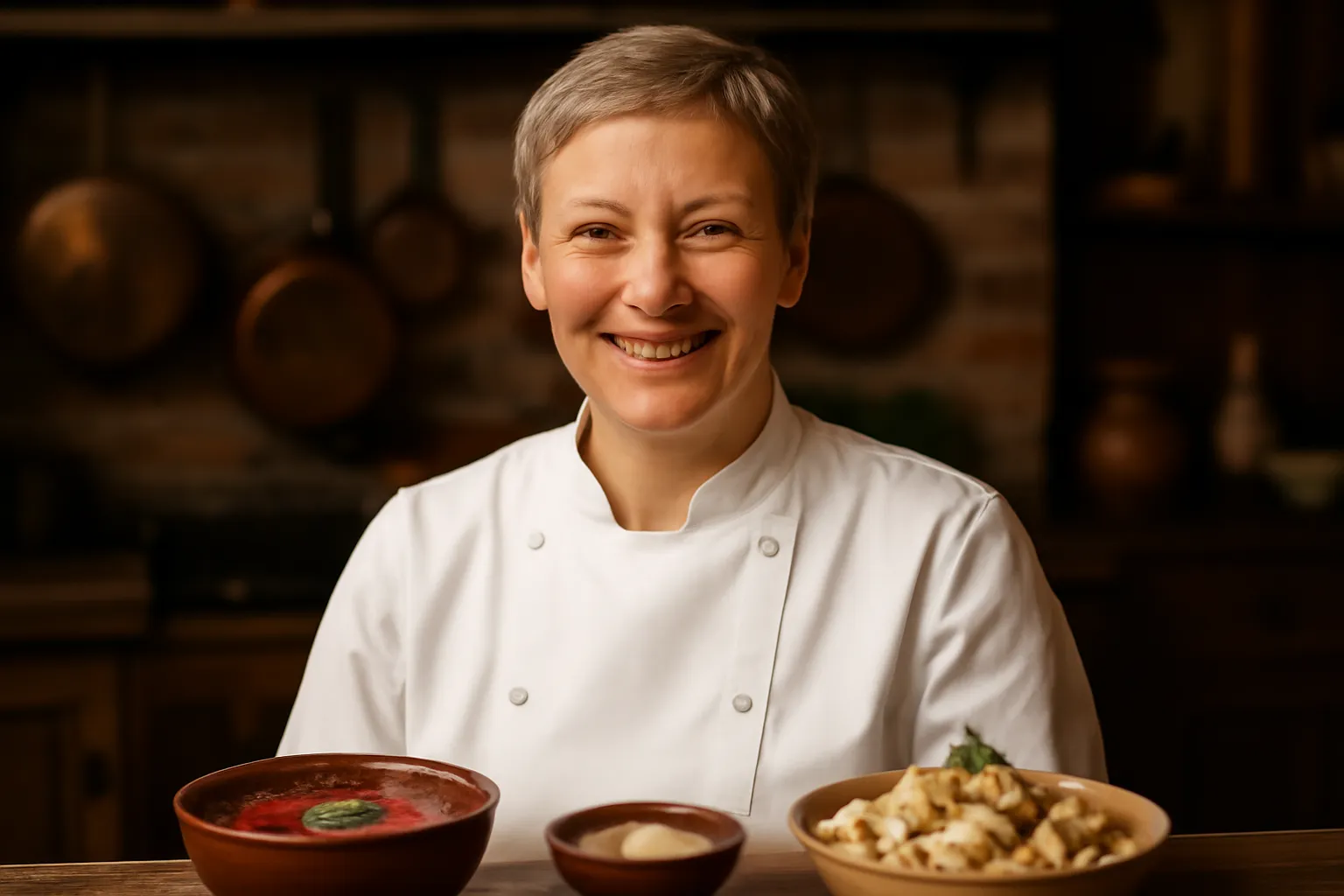
In the heart of Lyon, a city renowned for its culinary rigor and historical weight in the world of gastronomy, resides Camille Duvernay—a chef who has spent the last fifteen years bridging the gap between French technique and the soulful, complex traditions of Russian family cooking. Camille developed an interest in intercultural cuisine, helping expatriates and international couples navigate Slavic family gatherings. Today, she sits down with journalist Elise Fontaine to discuss why a well-made pot of borscht is more than just a meal—it is a diplomatic tool that can win over even the most skeptical Russian in-laws. With her unique perspective as both an outsider and a trained professional, Camille offers a roadmap for anyone looking to find their place at the Russian table.
Meet Camille Duvernay: From French Kitchens to Russian Family Tables
Elise Fontaine: Camille, you began your career in the prestigious kitchens of Lyon, the world capital of gastronomy, working under some of the most demanding chefs in Europe. How does a French chef find herself specializing in the nuances of Russian family cuisine and cultural etiquette?
Camille Duvernay: It is a journey that started with curiosity and ended with a deep respect for the “Dusha”—the soul—of the Russian kitchen. You see, in French cooking, we often focus on the precision of the sauce, the exactness of the sear, and the minimalist presentation that defines high art. But when I first encountered the Russian table during a research trip to Saint Petersburg in 2008, I realized that food there serves a different, perhaps more vital, social function. It is less about the ego of the chef and more about the cohesion of the tribe. In the French tradition, the chef is a soloist; in Russia, the cook is the conductor of an orchestra of hospitality that has played the same tune for centuries.
Here is the thing: my interest was piqued when I noticed how many of my international clients, often men marrying into Russian families, were utterly lost when it came to the expectations of their new in-laws. They would approach a dinner like a casual Sunday brunch in Paris or London, not realizing they were entering a ritualistic space. I learned from the “Babushkas” who have kept these traditions alive through generations. I realized that for a foreigner, mastering a few key dishes is not just about nutrition; it is a sign of respect for the heritage of their partner. I have developed an approach to teach these “outsiders” how to cook with care. It is about understanding that a meal is a marathon of hospitality—if you do not know the rules, the unspoken choreography of the kitchen, you will likely stumble before the main course even arrives. In Lyon, we cook for the stars; in Russia, we cook for the ancestors. It requires a total shift in mindset from “how do I impress” to “how do I belong.”
Why Food Is the Fastest Way Into a Russian Family
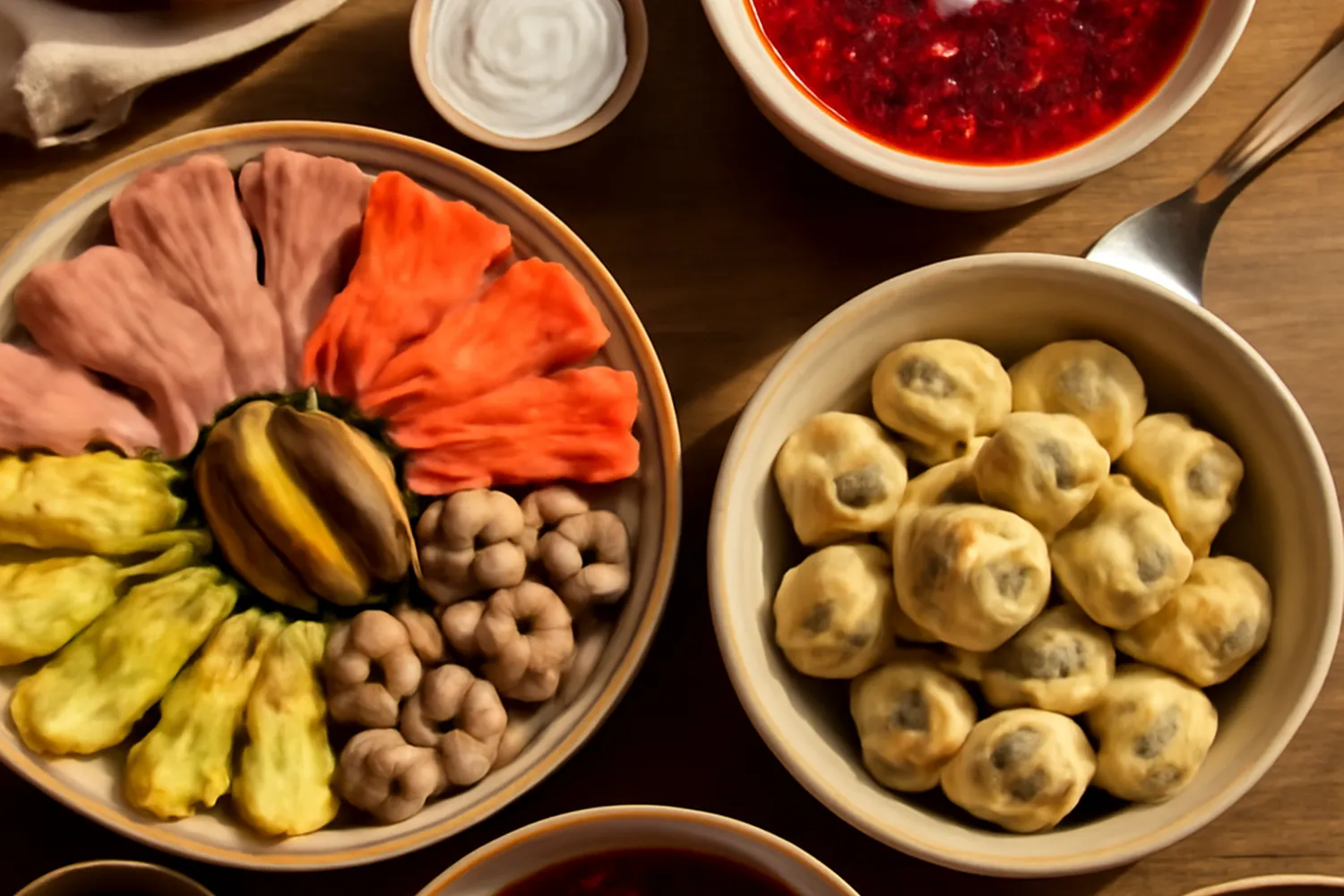
To retain: In a Russian household, sharing a meal is rarely just a social nicety — it functions as a test of character and a genuine gesture of acceptance into the family.
Elise Fontaine: We often hear that the way to a person’s heart is through their stomach, but you suggest this is particularly true when dealing with Russian parents. Why is food such a critical component of family bonding in this culture?
Camille Duvernay: In many Western cultures, a dinner party is a social event—a way to catch up with friends. In Russia, it is a ritual of acceptance and a barometer of character. When a Russian mother-in-law invites you to her table, she is offering you a piece of her family’s survival and prosperity. Historically, food was something to be cherished and shared generously, regardless of how much was available. For a foreign partner, showing an appreciation for—and a willingness to learn—these recipes signals that you value the family’s roots and that you are willing to put in the “trud” (labor) to integrate. It shows you aren’t just a visitor; you are a potential member of the lineage.
If you are following a complete Slavic brides guide to understand your partner’s background, you must realize that the kitchen is the command center of the home. It is where the real decisions are made, where secrets are shared, and where a person’s worth is often quietly assessed. Let me give you a concrete example: I once coached a British client who was terrified of meeting his fiancée’s father, a very stern, traditional man from Yekaterinburg who had spent his life in the industrial sector. Instead of bringing just a bottle of wine, which is standard but a bit impersonal, we practiced making “Blini” together for three days. When he arrived and helped in the kitchen, showing he knew how to flip a thin, lacy pancake without breaking it, the tension vanished instantly. It showed he wasn’t just a guest; he was willing to be part of the “byt”—the daily life and labor of the family. The father-in-law didn’t care about his bank account at that moment; he cared that the man was capable of contributing to the household’s warmth and was humble enough to learn their ways. This willingness to participate in the domestic ritual is often viewed as a sign of emotional maturity and long-term stability. This is not just about calories; it is about the “teplo”—the warmth—you bring to the hearth.
The Non-Negotiable Dishes Every Foreign Partner Should Learn
Elise Fontaine: If a foreigner wants to impress their in-laws, they cannot simply cook anything. What are the essential, non-negotiable dishes that carry the most cultural weight in a Russian household?
Camille Duvernay: You have to start with the “Big Three”: Borscht, Pelmeni, and the Olivier Salad. Let’s talk about Borscht first. Every family has their own version, passed down through generations like a sacred text. Here is the thing: you are not just making a beet soup. You are making a statement. It must have the right balance of sweet and sour, and the beets must retain their vibrant, deep ruby color. If it looks orange or pale, you have failed to sauté the beets correctly with a touch of acid—usually vinegar or lemon juice. I have seen mother-in-laws judge a man’s entire character based on the clarity and richness of his broth. It requires patience; you cannot rush the slow extraction of flavor from the beef shank.
Pelmeni, the traditional meat dumplings, are another cornerstone. Traditionally, making Pelmeni was a communal family activity where hundreds—sometimes thousands—were folded and frozen for the long winter months. It was the original “meal prep” born of necessity. If you can sit down with your mother-in-law and help her fold these perfectly, you have earned hours of conversation and respect. Finally, the Olivier Salad—often called “Russian Salad” abroad—is the king of the festive table. It requires precise dicing. If your potatoes and carrots are unevenly cut, it shows a lack of patience and attention to detail. Russians value the “trud”—the labor—that goes into a meal. I always tell my students: do not use a food processor for an Olivier. You must use a knife. The uniformity of the cubes is a testament to your discipline and your willingness to spend two hours on a single dish for the sake of the family. A perfectly diced Olivier is a visual representation of your commitment to the family’s standards of excellence.
| Dish | Cultural Significance | Difficulty Level | Key Ingredient |
|---|---|---|---|
| Borscht | The “Soul” of the home; represents domestic skill. | High (Timing is key) | Smetana (Sour cream) |
| Pelmeni | Symbol of family unity and communal labor. | Medium (Repetitive) | Freshly ground meat mix |
| Olivier Salad | The essential holiday dish; signifies celebration. | Low (Labor intensive) | High-quality mayonnaise |
| Holodets | A test of “true” Russian palate acceptance. | Very High (Texture) | Garlic and meat broth |
Etiquette Mistakes at the Russian Table Foreigners Always Make
Elise Fontaine: Cooking the food is one thing, but the behavior at the table seems equally fraught with potential “faux pas.” What are the most common etiquette mistakes you see foreigners making during these intense family gatherings?
Camille Duvernay: Oh, there are so many! For starters, never, ever whistle at the table—or anywhere indoors, really. It is an old superstition that you are “whistling your money away,” and it can genuinely unsettle more traditional hosts. But more specifically to the meal, many foreigners make the mistake of starting to eat before the host has finished the first toast. You must wait. In Russia, the meal is paced by these verbal markers. Also, when you are served, do not even think about refusing a second helping initially. The host will insist; it is a game of polite “no” followed by a grateful “yes.” If you stop after one plate, they will assume you are either ill or that the food was subpar, which is a major insult to the effort they put in.
Another big one is how you handle your bread. Bread is sacred in Russia—it is the staff of life that saw the country through sieges, wars, and famines. You should never throw away bread or leave it face down on the table. It is a sign of deep disrespect to the history of the country and the struggle of previous generations. If you are following a meeting the Russian family guide, you will learn that being a “good guest” is an active role. You must be engaged, you must compliment the cook specifically—mentioning the texture of the dough or the clarity of the broth—and you must never show up empty-handed. Bringing a high-quality cake or a box of premium chocolates is the bare minimum. I once saw a guest bring a half-eaten bag of cookies; the silence that followed was colder than a Siberian winter. Furthermore, never put your feet up on anything and try to avoid crossing your legs in a way that shows the sole of your shoe—it is considered incredibly uncouth in a traditional setting. These subtle movements are tracked by the elders as markers of your upbringing and “kultura.”
Zakuski: The Art of the Table Before the Meal Even Starts
Elise Fontaine: Before the main course, there is the “Zakuski” spread. For a foreigner, this can look like a full meal on its own. How should one approach this stage of the evening without offending the host?
Camille Duvernay: Zakuski is where the real bonding happens. It is a spread of cold appetizers—pickles, marinated mushrooms, salted herring, salo (cured pork fat), and various salads. You see, the purpose of Zakuski is to provide a “buffer” for the vodka toasts that will inevitably follow. Here is the thing: you must pace yourself. A novice will fill up on bread and herring in the first twenty minutes and then struggle through the main course, which is often a heavy meat dish like roast pork or beef stroganoff. This is seen as a tactical error.
Let me give you a concrete example of a “Zakuski” strategy. You should take small portions of everything—don’t skip the “Selyodka pod Shuboy” (Herring under a fur coat). It’s a layered salad of diced pickled herring, eggs, beets, carrots, potatoes, and mayonnaise that many foreigners find intimidating because of the combination of fish and bright purple beets. However, eating it with gusto shows you are adventurous and respect local tastes. If you can handle “Salo” (cured pork backfat) on a piece of dark rye bread with a clove of raw garlic, you will instantly earn the respect of the father-in-law. It signals that you are not a “soft” foreigner; you can handle the real, pungent, and powerful flavors of the land. I have seen men win over their future fathers-in-law simply by eating a piece of raw garlic and a slice of fat without flinching. It is a test of endurance as much as taste. The Zakuski table is also the place for “small talk” that isn’t really small—it’s where your personality is vetted before the heavier topics come out with the main course. It is an intricate dance of flavor and social positioning that lasts for hours.
Essential Zakuski Items:
- Pickled Vegetables: Cucumbers and tomatoes are mandatory; they should be crunchy and salty, never mushy.
- Cured Fish: Herring or smoked salmon, often served with sliced onions and a drizzle of unrefined sunflower oil.
- Salo: Thinly sliced cured pork fat, best served straight from the freezer on black bread.
- Marinated Mushrooms: Usually forest mushrooms like porcini or chanterelles, preserved in vinegar and dill.
- Rye Bread: Dark, dense, and slightly sour “Borodinsky” bread, often topped with coriander seeds and a hint of molasses.
Vodka, Toasts, and the Unwritten Rules of Social Drinking
Elise Fontaine: We cannot talk about a Russian family dinner without mentioning vodka. For many foreigners, this is the most intimidating part of the cultural exchange. What are the rules for drinking with in-laws?
Camille Duvernay: First, forget everything you know about “shots” in a Western bar. In Russia, vodka is a companion to food, never a replacement. You never drink vodka without a toast, and you never sip it like a cocktail. You drink it in one go, but only after the toast is finished. The order and subject of toasts can vary from one gathering to another. If the dinner is particularly formal or celebratory, the toasts will continue for hours, becoming more poetic, historical, and personal as the night goes on. It is a performance of eloquence. If you are asked to give a toast, do not just say “Cheers.” Mention the hospitality, the beauty of the home, or your hopes for the future.
If you do not drink alcohol, you must have a valid reason ready—medical reasons or driving are generally accepted without much pushback. But you should still participate with a glass of juice or “Mors” (berry drink). Never just sit there with an empty glass when everyone else is raising theirs. And here is a crucial tip: never pour your own drink if there is a host or a man older than you at the table. Wait for them to pour. If you are the one pouring, never pour “on the weight” (holding the glass in the air while pouring); the glass must be firmly on the table. These small details show you have done your homework and that you respect their customs. The rhythm of the meal is dictated by the toasts. Do not rush the drinking. The goal is to maintain a “warm” state of sociability, not to get drunk. Eating a fatty piece of Salo or a large spoonful of Olivier salad between drinks is the traditional way to stay sober longer, as the fat coats the stomach and slows alcohol absorption—a trick every expat should learn. It is a marathon, not a sprint.
How to Host a Successful First Family Dinner as a Foreigner
Elise Fontaine: Suppose the roles are reversed and the foreign partner is hosting the Russian in-laws for the first time. How should they prepare to meet these high expectations in their own home?
Camille Duvernay: Hosting is a test of your “Khozyain” (host) or “Khozyayka” (hostess) skills. In Russia, a table should never have empty space. If I can see the tablecloth, there isn’t enough food. This can be overwhelming for Westerners who prefer plated, minimalist meals or a structured three-course service. To host successfully, you must adopt the “abundant table” philosophy. Even if you are living in a small apartment, the table must groan under the weight of the dishes.
- Prepare 4-5 Zakuski: Even if they are simple—some olives, some pickles, a plate of sliced meats—variety is key. It creates a sense of luxury and choice.
- The Main Event: Choose something classic like “Beef Stroganoff” or “Kotleti” (meat patties). They are crowd-pleasers and hard to mess up if you follow the traditional ratios of meat to breadcrumbs.
- The Bread Basket: Ensure there is plenty of fresh bread, both white and dark. A table without bread is considered incomplete, almost tragic.
- Tea Ritual: The meal does not end with the main course. You must have a tea service with sweets, jam, and perhaps a “Pirog” (pie). This is when the real, deep conversations happen.
- Temperature Control: Russians generally prefer their hot food very hot and their vodka very cold. Don’t serve lukewarm soup.
You see, hosting is about showing that you can provide and that you care about the comfort of your guests. It is a display of stability and care. If you are living in a small apartment or in a different environment, as discussed in the context of living in Russian regions vs metropolis, your ability to create a “warm” home through food is what will be remembered. It bridges the gap between different lifestyles and economic backgrounds, creating a shared space of mutual respect. In the regions, the expectations might even be higher, as the home is often the primary center of social life, whereas in the metropolis, people might be slightly more accustomed to restaurant culture—though the “home table” still reigns supreme. A successful host anticipates the guest’s needs before they are even spoken.
Adapting Russian Recipes When Ingredients Are Hard to Find
Elise Fontaine: Many foreign partners live outside of Russia. How do you advise them to recreate these specific flavors when they can’t find items like Tvorog or proper Smetana in their local supermarkets?
Camille Duvernay: This is a common challenge, especially in Western Europe or North America, where the dairy profiles are very different. You have to be a bit of a culinary chemist. For Smetana, which is much thicker and more acidic than French crème fraîche or American sour cream, I recommend mixing high-fat sour cream with a bit of heavy cream and a drop of lemon juice, then letting it sit for an hour to develop that characteristic tang. For Tvorog (Russian farmers’ cheese), you can actually make it at home by gently heating kefir until it separates into curds and whey, then straining it through cheesecloth. It’s a labor of love, but the difference in taste is astronomical compared to generic cottage cheese.
Here is the thing: the “spirit” of the dish is more important than a 100% match of the ingredient. If you can’t find Borodinsky bread, a heavy German pumpernickel is a respectable substitute because it shares that dense, molasses-rich profile. Let me give you a concrete example: I had a client in Spain who couldn’t find the right kind of barrel-aged pickles for his “Rassolnik” (pickle soup). We used local cornichons but added a bit of extra brine and some dried dill seeds to mimic the Russian fermentation profile. The in-laws were impressed not just by the taste, but by the effort he took to source and adapt ingredients to make them feel at home. It showed a level of dedication that is highly valued—it proved he wasn’t just following a recipe; he was trying to capture a memory. This effort is often more touching than the actual culinary result, as it demonstrates a profound respect for their heritage. It proves that you are not just a consumer of their culture, but a curator of it.
What Grandmothers Really Judge You On: The Psychology of the Babushka
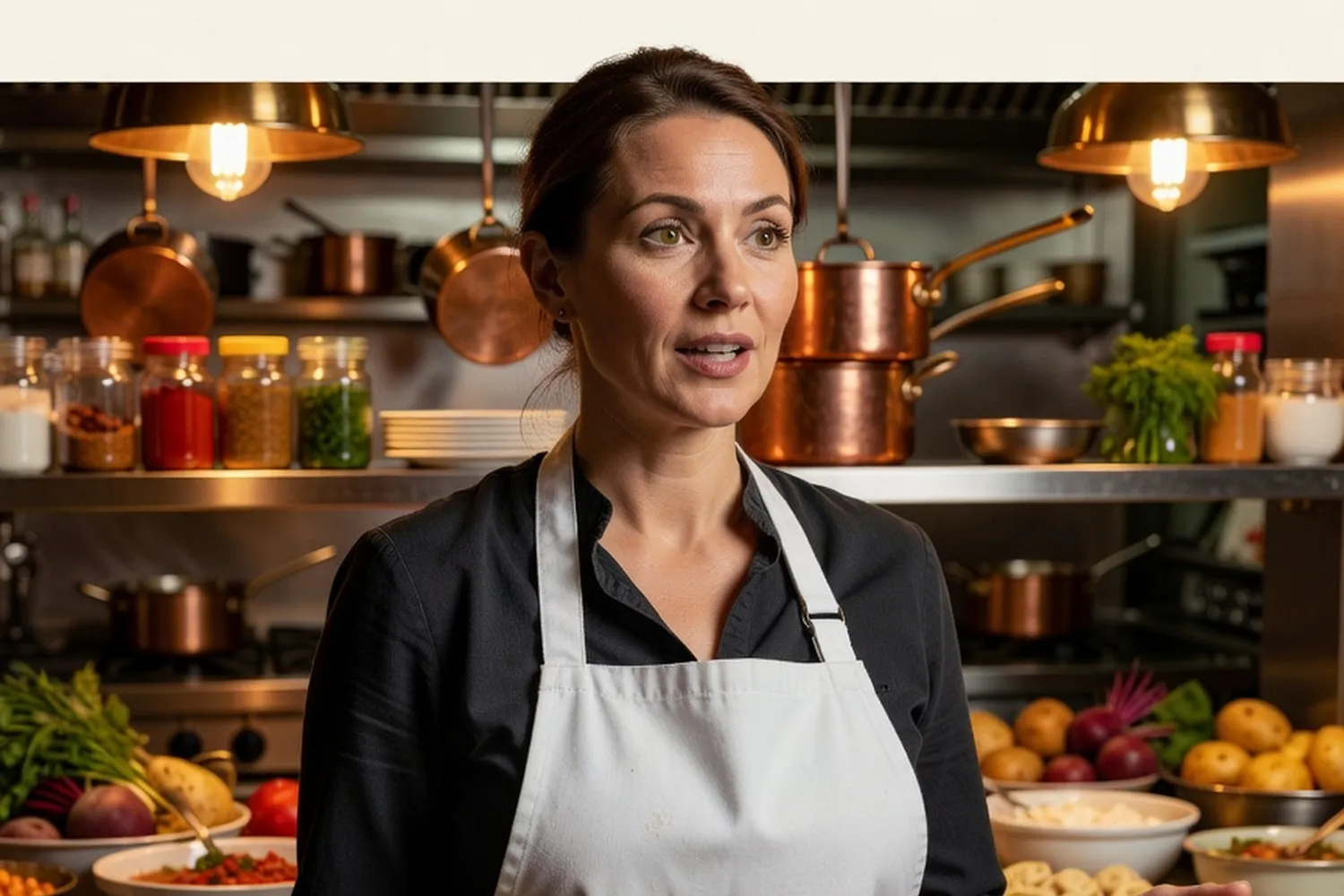
Expert tip: Asking a Russian grandmother for her recipe is not small talk — it is a request to be trusted with the family’s culinary secrets, and answering it sincerely usually opens the door faster than any gift ever could.
Elise Fontaine: We have to talk about the “Babushka.” She is often the final judge of any partner. What is she looking for when she watches a foreigner in the kitchen or at the table?
Camille Duvernay: The Babushka is looking for “diligence.” She wants to see that you aren’t lazy or superficial. If she sees you using a food processor to chop vegetables for a salad instead of doing it by hand, she might think you’re taking shortcuts in the relationship too. It sounds extreme, but for that generation, hand-cutting vegetables is a sign of care and love. It is about the time invested in the person you are feeding. To her, time is the ultimate gift. If you aren’t willing to spend an hour dicing carrots, do you really love her grandchild? She views the labor of the kitchen as a metaphor for the labor of a marriage—both require steady hands, patience, and a refusal to take the easy way out.
She is also looking at your appetite. In her eyes, a healthy appetite equals a healthy soul and a good constitution. If you eat like a bird, she will worry that you are sickly or, worse, that you don’t like her cooking—which is a personal insult to her life’s work. And let’s be honest, she is also looking at how you treat her daughter or son. But she observes this through the lens of the table. Do you pour the tea? Do you help clear the plates? Do you ask for the recipe? Asking for her recipe is the ultimate flattery. It acknowledges her as the matriarch and the keeper of the family’s culinary secrets. It is a surrender of your own culinary ego to her experience. I have seen many cold relationships thaw simply because a man asked for the secret to a grandmother’s “Vareniki” (sweet dumplings). She might even pretend the recipe is a secret at first, but that’s just part of the dance—keep asking, and eventually, she will let you in. Once you have the recipe, you have the keys to the kingdom.
Practical Concerns and Health Aspects of the Russian Diet
Elise Fontaine: To wrap things up, let’s address some practical concerns. Many people worry about the logistics and the health aspects of such heavy, traditional meals.
Camille Duvernay: It is true, Russian cuisine can be heavy on fats and carbs—lots of butter, cream, and potatoes. But it is also rich in fermented foods—pickles, sauerkraut, kefir—which are often valued for their place in a varied diet. If you are worried about the health impact, especially if you are navigating the healthcare system guide for expat couples, you can balance the meal by serving more of the fresh vegetable zakuski or using leaner meats for the main course. You don’t have to eat five plates of potatoes to be a good guest; you just have to eat with enthusiasm and focus on the variety.
Another frequent question I get is about the cost. Russian food doesn’t have to be expensive. It is “peasant food” at its heart—cabbage, beets, potatoes, and cheaper cuts of meat made delicious through long simmering and careful seasoning. The “luxury” comes from the time you spend, not the money you drop at the grocery store. It is a cuisine of patience. It’s about taking a humble cabbage and turning it into a masterpiece over four hours. This makes it accessible for anyone, regardless of their budget, as long as they are willing to invest the hours in the kitchen.
| Common Concern | Expert Advice |
|---|---|
| Too much fat? | Use Smetana on the side rather than mixing it in to give guests control over the richness. |
| Allergies? | Be very clear about nut or gluten allergies early, as “hidden” ingredients like flour in sauces are common. |
| Vegetarian? | Focus on “Lenten” (Postniy) recipes, which are traditional during Orthodox fasting periods and use no animal products. |
| Too much salt? | Balance pickled items with fresh herbs like dill and parsley to refresh the palate. |
Things to Avoid Discussing at the Table:
- Politics: Especially current geopolitical tensions; the table is a sanctuary for unity, not a podium for debate.
- Religion: Unless the family is openly discussing it and you are invited to share your views with respect.
- Money: Bragging about salary or the cost of your watch is seen as “vulgar” (poshly) and out of place in a family setting.
- Criticism of Russia: Even if the locals are complaining about the weather or the roads, as a guest, you should remain positive and appreciative. It is better to focus on the beauty of the traditions and the warmth of the hospitality.
5 Quick Questions — True or False
1. Is it true that you must always finish everything on your plate? Camille Duvernay: Mostly true. Leaving a significant amount of food suggests you didn’t like it. If you are truly full, leave a tiny bit and explain how delicious it was but that you are “polniy” (completely full) and couldn’t possibly eat another bite. The verbal praise compensates for the physical leftovers.
2. Should you bring flowers to the mother-in-law? Camille Duvernay: True, but with a major catch! It must be an odd number of flowers. Even numbers are strictly for funerals and will cause a shock. Avoid yellow flowers, as they can symbolize betrayal or separation. Red or pink roses are generally a safe and appreciated choice for any occasion.
3. Is tea always served with sugar and lemon? Camille Duvernay: True, but often it is served with “Varenie” (whole fruit preserves). You take a small spoonful of jam, put it in your mouth, and then sip the hot tea through it—a technique that takes some practice to master! It’s a delightful way to experience the fruit’s sweetness without diluting the tea.
4. Can you wear your shoes inside the house? Camille Duvernay: False! This is a major offense in any Russian home. Russian streets can be dusty or muddy, and the home is a sanctuary. You must take your shoes off at the door. The host will usually provide you with “tapochki” (slippers). Bringing your own clean indoor shoes is also a very polite gesture.
5. Is it rude to refuse a toast? Camille Duvernay: True, if done without a valid reason. If you don’t drink, hold the glass to your lips to show participation, or toast with a non-alcoholic beverage so you are still part of the collective moment and the shared energy. The act of raising the glass is more important than the liquid inside.
Your Final Advice for Foreign Partners
Elise Fontaine: Camille, what are your three final pieces of advice for someone about to face their first Russian family dinner?
Camille Duvernay:
- Master one “Signature Dish”: Don’t try to cook the whole menu; you’ll likely get overwhelmed and the quality will suffer. Master one thing—like a perfect Syrniki (cheese pancakes) for breakfast or a solid Olivier salad—and make it your specialty. It shows you’ve put in the effort to learn a specific part of their culture. This one dish becomes your calling card and your way into their hearts.
- Be an Active Participant: Don’t just sit there like a customer in a restaurant. Help with the dishes, ask about the family photos on the wall, and be prepared to tell stories about your own family and heritage. Russians value “iskrennost”—sincerity and openness—above almost everything else. They want to know who you are, not just what you do for a living. The table is a place for human connection.
- Learn the Language of Food: Even if your Russian is limited, learn the names of the dishes and words like “Vkusno” (delicious) and “Spasibo” (thank you). Food is a language of its own, but a few well-placed words go a long way in showing that you are trying to bridge the gap and that you respect the house you are in. A simple “Priyatnogo appetita” before eating can open many doors and soften many hearts.
For more insights into the intersection of romance and international culture, readers may explore the editorial magazine on love and cultural cuisine of couples or delve into the literary and cultural seduction magazine for a deeper look at the art of cross-cultural relationships.
Frequently Asked Questions
What is the single most important dish to learn to make first?
Borscht. It is the emotional centerpiece of a Russian family table, and every grandmother has her own version she considers the only correct one. Learning a competent, respectful version, even if it differs from hers, signals genuine effort. Attempting it badly or dismissing it as 'just beet soup' is a fast way to lose credibility.
Is it rude to refuse vodka at a family dinner?
Refusing outright, without explanation, can read as cold, but a polite explanation, health reasons, driving, personal choice, is generally respected by modern Russian families, especially younger generations. What matters more is participating in the toast itself, even with a small symbolic sip or a non-alcoholic substitute, rather than sitting silently while others toast.
What should never be discussed at the table during a first family dinner?
Politics and religion, especially anything touching current geopolitical tensions, should be avoided entirely at a first dinner. Family stories, food, travel, and genuine curiosity about traditions are safe, warmly received topics that build trust without risking a tense evening.
Do I need to bring a gift when invited to a Russian family meal?
Yes, always. Flowers for the hostess, in odd numbers, never even, and never yellow which can symbolize separation, or a quality bottle of something (wine, cognac, or a treat from your own country) are the standard expectations. Arriving empty-handed is considered a real oversight, not a minor detail.
How long does it typically take to be fully accepted by a Russian family?
There is no fixed timeline, but most foreign partners report a noticeable shift after the second or third shared meal, once the family sees consistent effort rather than a one-time performance. Genuine curiosity about their food and traditions, repeated over several visits, tends to matter more than any single grand gesture.