 EN
EN ES
ES FR
FR RU
RU
Registering a marriage celebrated in Russia means making your union usable in your home country’s paperwork: a ZAGS marriage certificate on its own will not satisfy a bank, an immigration officer or a passport office in New York or London. The chain is the same on both sides of the Atlantic — original ZAGS certificate, Hague apostille, certified translation, then registration or direct use with your local authority — followed by the spouse visa, which is the slowest step by far. Budget realistically for $200–500 of documents, and for a total timeline that runs well past a year once the visa stage begins.
This guide walks an anglophone husband through each step, for both the United States and the United Kingdom, with the practical details that decide whether the process feels orderly or chaotic.
Why Register a Marriage Celebrated in Russia?
A marriage valid in Russia is generally treated as valid abroad, but “valid” and “usable” are different things. In practice, the registered and documented marriage is the key that unlocks almost everything else:
- a name change for your wife, with the Social Security Administration in the US or via deed poll and HM Passport Office in the UK;
- joint bank accounts, insurance, tax filing status and pension beneficiary designations;
- the spouse visa petition — the US CR-1/IR-1 and the UK spouse visa both require a legally documented marriage;
- later, children’s birth registration, inheritance and any citizenship transmission.
Many couples discover the gap at the worst moment: the visa interview, when an officer asks for proof of a marriage that no document in the file actually evidences. Treat registration as the first link in a longer chain — name, immigration, children — and start it early, ideally in the weeks right after the wedding, not when a job offer or a moving date forces the issue.
Where It Happens: No Single Counter, and That Is Normal
Anglophone countries handle foreign marriage differently from France’s centralized system, and the first thing to accept is that there is no equivalent of a single Nantes-style registry to send everything to.
In the United States, marriage is a state matter. There is no federal marriage registry, and a marriage celebrated abroad is generally recognized as long as it was valid where performed. What you actually do with the Russian certificate depends on the purpose: the Social Security Administration handles a name change from a foreign marriage certificate (with a certified translation), the State Department deals with passports, and some states or counties will record a foreign marriage with the local clerk if you want it on file. Requirements vary by state, so check with your specific authority before ordering translations.
In the United Kingdom, you can register a marriage celebrated abroad with the General Register Office. The GRO procedure asks for the original foreign certificate, a certified translation if it is not in English, identity documents, and in some cases an apostille; the marriage is then recorded and a UK-style certificate can be issued. The GOV.UK guidance is detailed and updated periodically, so read the current version before you start.
The strategic consequence is the same in both countries: your bottleneck is not a registry counter but the quality and completeness of the Russian document chain you bring to each authority.
The Exact Documents to Collect
The document set below covers what US and UK authorities typically ask for. None of it is exotic; the discipline is in the order and the freshness of each piece:
| Document | Where to obtain it | Indicative cost | Timeline |
|---|---|---|---|
| ZAGS marriage certificate, original (order 2–3 copies) | ZAGS office of the place of marriage in Russia | modest, in rubles | 1–4 weeks |
| Apostille on the certificate | Competent Russian authority (territorial Ministry of Justice) | modest | 1–4 weeks |
| Certified translation of certificate and apostille | Certified/sworn translator in your country | $30–60 / £25–50 per page | a few days |
| Full birth certificate of your wife, with apostille and translation | ZAGS in Russia | variable | 1–6 weeks |
| Copies of both passports | — | — | — |
| Proof of citizenship (passport or naturalization certificate) | — | — | — |
| Name-change request form (SSA in the US; deed poll or passport forms in the UK) | Relevant authority | free–small fee | — |
The coordination between two countries is the real challenge: several Russian documents are issued after the wedding, then apostilled, then translated. Build the full list before placing any orders, because an apostille obtained on a stale certificate sometimes has to be redone — at your expense and on your clock. And order several original copies of the marriage certificate from the start: one will stay in your home file, another remains useful in Russia for name-change procedures, and a third is your insurance against loss or an authority keeping the original.
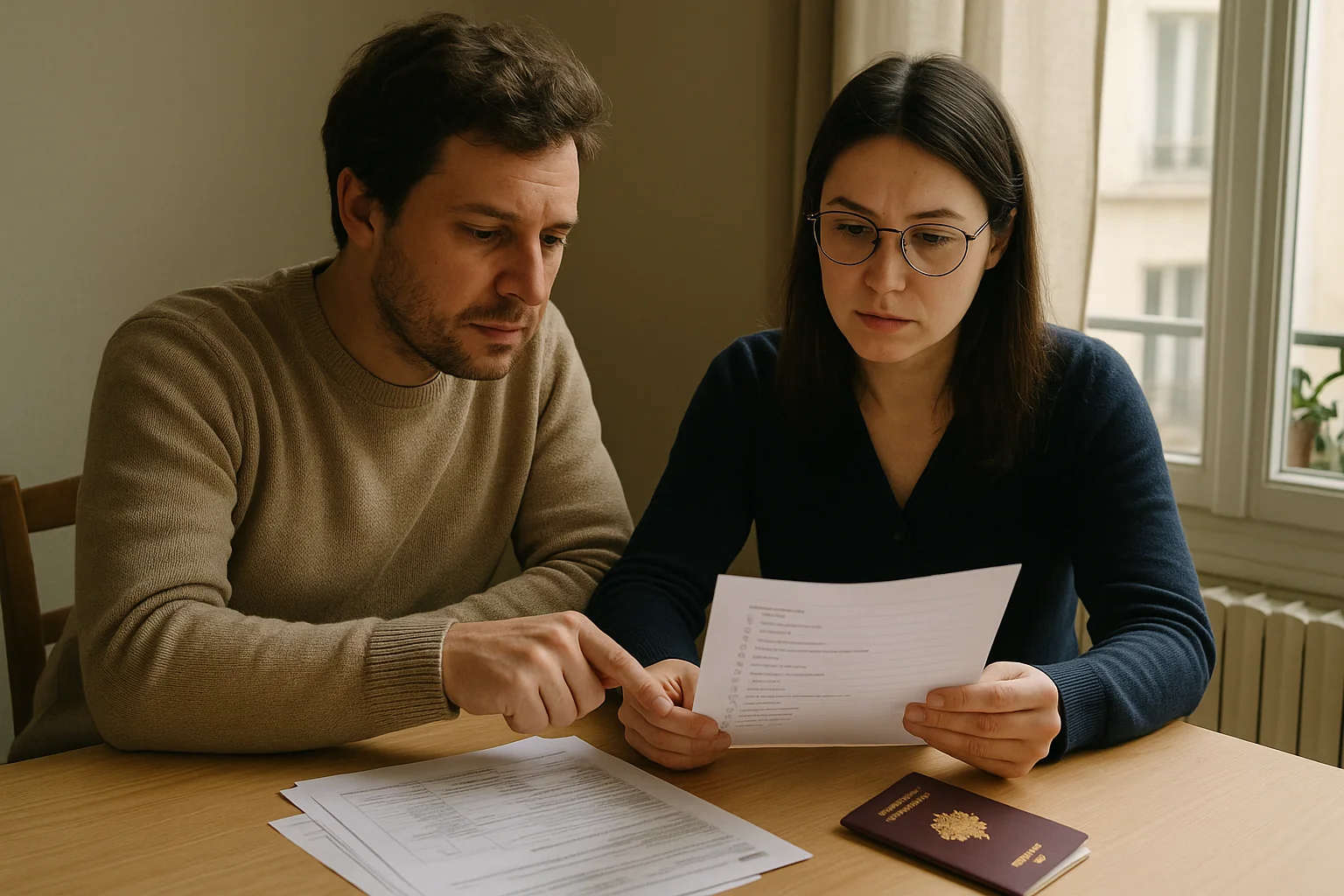
Before anything is apostilled, have your translator read every Russian document for spelling and consistency: the bride’s maiden name, patronymic and birth date must match her passport exactly, and the certificate must match the ZAGS entry. Fixing a typo at the ZAGS counter takes days; explaining the same mismatch to a foreign authority takes months. Treat that review as part of the translation fee, not as an optional extra — it is the cheapest insurance in the entire process.
Apostille and Certified Translation: Two Non-Negotiable Steps
Russia, the United States, the United Kingdom and most of Europe are all parties to the 1961 Hague Apostille Convention. That is good news: a Russian public document does not need consular legalization, only an apostille — a certification from the competent Russian authority that authenticates the origin and signature of the document without confirming its content. An apostille validates the chain of signatures, not the substance.
Translation follows the same logic. Every Russian document — the marriage certificate, the apostille, the birth certificate and its apostille — needs a certified translation into English. In the US, “certified translation” means a translator’s signed statement of accuracy; in the UK, it is typically a translation by a recognized professional body member or a sworn translator, depending on the authority. Budget $30–60 or £25–50 per page, keep the originals untouched by staples or marks, and remember that each authority may want to see the original plus translation together.
The legal side of international marriage — validity of acts, formal traps, public policy — is described in our interview with a lawyer on Franco-Russian marriage, which details what attorneys check first on exactly this kind of file.
That documentary rigor mirrors what a notary verifies for a mixed couple: acts, dates, filiations, property coherence. Our interview with a notary on finances and patrimony shows why those details become expensive the moment real estate or an inheritance enters the picture.
It is also the right moment to settle the marital property regime, because registration records your civil status, not your finances. Our guide to the prenuptial agreement in a Franco-Russian marriage lays out the options — community, separation, participation — and their concrete consequences for a couple across two countries.
Realistic Timelines and How to Track the File
No authority publishes a guaranteed timeline for the registration stage, and the practical range depends on the file: count two to eight weeks for documents in Russia, then days to weeks per authority at home. The spouse visa is the long pole. US spousal visas (CR-1/IR-1 through consular processing) are commonly reported at twelve months or more end to end; UK spouse visa decisions are typically quoted in months and can stretch with document checks. Couples who plan a move date before the visa stage almost always end up disappointed.
Concrete habits that keep the chain moving:
- Send every form complete, with a cover page listing the enclosures;
- Keep copies of everything, including courier receipts;
- Answer any request for additional evidence within days, not months;
- Never promise your wife an arrival date until the visa is actually issued.
One marker tells you the registration stage is done: once your home authority has accepted the marriage, name-change and visa filings proceed normally. Until then, treat silence as normal and follow-ups as the exception.
The wider landscape of what happens after the wedding — residency options in both directions, paperwork sequences — is mapped in our dossier on post-marriage legal procedures. And if you are not married yet, the fiancée route runs on a different clock entirely: our K-1 visa guide for a Russian fiancée is worth reading before you choose a path.
Name Change and Practical Effects at Home
Once the marriage is registered or accepted, the name-change machinery starts. In the US, the Social Security Administration accepts a foreign marriage certificate with a certified translation as evidence for a name change; do the SSA first, then the passport and driver’s license in that order, since each agency expects the previous one to match. In the UK, the route runs through HM Passport Office (with the GRO registration or the apostilled foreign certificate) or a deed poll if you want a different arrangement.
Registration changes nothing automatically. If your wife wants to use your surname, that is a separate declaration, not a side effect of the marriage itself. And it is the right moment to align the practicalities: notifying banks and insurers, updating tax filing status and checking beneficiary designations — free but time-consuming steps that couples routinely discover too late.
The Spouse Visa After Registration
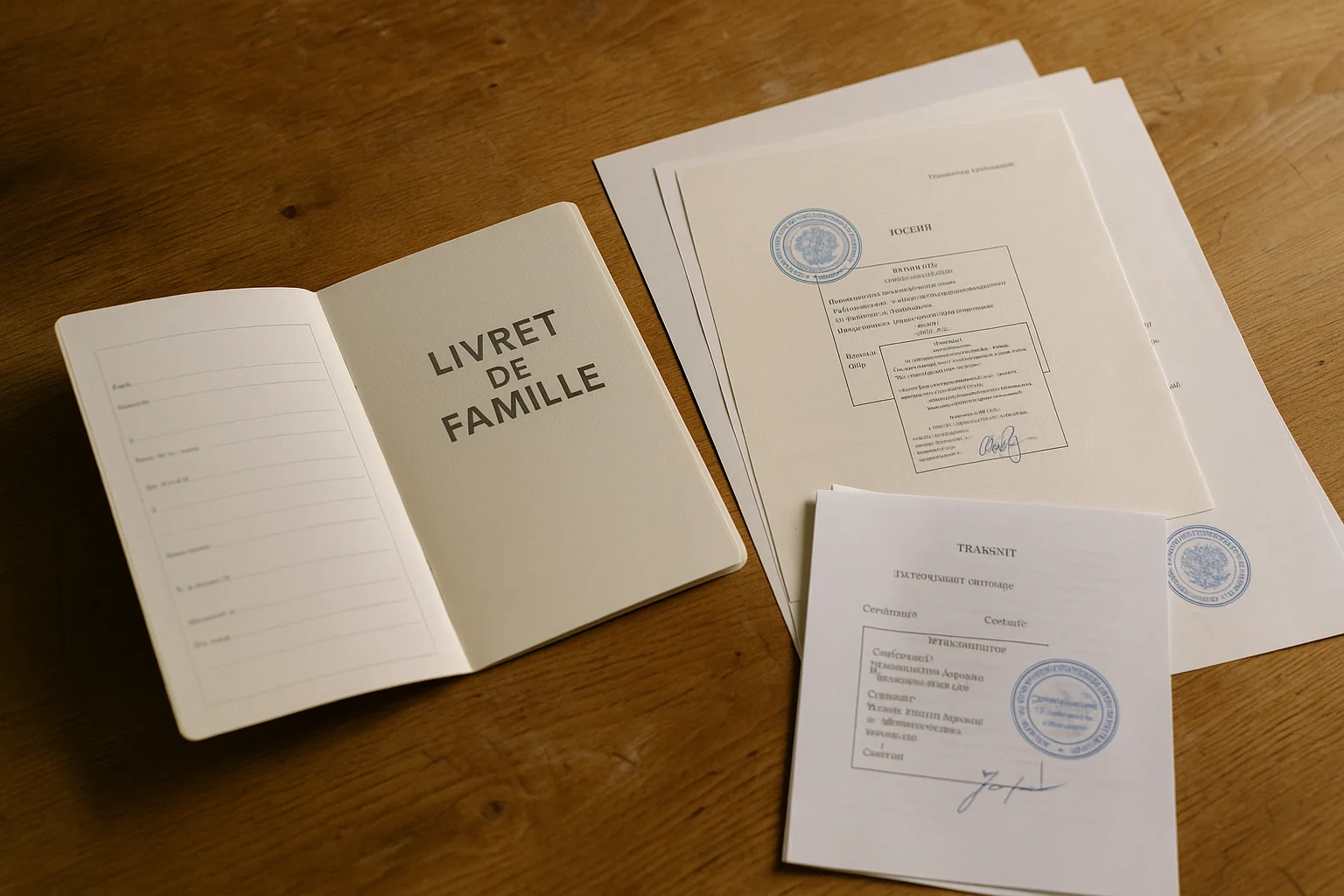
This is the step most couples are really waiting for: bringing a Russian wife to live with you on a stable status. The logic is identical in both countries — the spouse visa requires a documented, legally recognized marriage, which is exactly what the registration chain produces.
In the United States, the route is the CR-1 (conditional resident, married under two years) or IR-1 spousal immigrant visa: a petition with USCIS, then National Visa Center processing, then a consular interview, with the Russian marriage certificate, its apostille and certified translation in the evidence file. In the United Kingdom, the spouse or partner family visa under Appendix FM requires the marriage evidence, English language proof and meeting the minimum income requirement, which the government has revised upward in recent years — check the current threshold on GOV.UK rather than relying on any figure you read elsewhere.
The practical timing matters more than the category: between registration, petition processing and interview scheduling, you should count many months beyond the paperwork stage. Experienced couples start the registration file the week they come back from the honeymoon. If your situation is different — fiancée rather than wife, or marriage celebrated in your home country — the paths change: our comparison of fiancée and spouse visa routes across the USA, France and Canada details the options and their sequencing.
When Registration Can Fail
Registration and visa files are refused or stalled in a small number of well-identified ways:
- an incomplete file or stale certificates, returned without examination;
- a missing apostille, or one issued by an incompetent authority;
- uncertified translations, or translations that omit part of the record;
- a suspected fake document, which triggers long verifications;
- a marriage contrary to public policy (age, bigamy, consent) — rare, but real;
- unexplained inconsistencies between documents (names, dates, filiation).
The good reflex: have your translator check each Russian document before the apostille where possible, and keep a written trail of any correction requested by the ZAGS. If a refusal does arrive, the decision letter states the reason and the appeal route — administrative review first, then the relevant tribunal or court with an immigration lawyer. Prevention beats appeal: most stalls involve documents the couple could have fixed in Moscow for a few days’ delay.
Real Budget and Common Mistakes
Plan on $200–500 (or £150–400) for everything outside the authorities themselves: ZAGS certificates and Russian apostilles, certified translations, couriers, photos and copies. Translation is the variable — its cost scales with page and document count.
The mistakes that cost the most:
- ordering documents in the wrong sequence and letting a birth certificate go stale while another waits on apostille;
- using an uncertified translator to save $50 and redoing everything;
- forgetting the apostille on the wife’s birth certificate, not just the marriage certificate;
- sending plain photocopies where originals or certified copies are required;
- announcing a moving date to an employer or landlord before the visa exists.
Registering a marriage celebrated in Russia is neither fast nor complicated: it is simply sequential. Every document has its place in a chain — certificate, apostille, translation, filing — and a skipped link is paid for in weeks. Assemble the file once, completely and in the right order, then let the authorities work: the name change, the spouse visa and everything after it are all waiting on that first link.
Frequently Asked Questions
Do I need to register my Russian marriage in the United States?
The United States has no federal marriage registry, and a marriage valid where celebrated is generally recognized in the US. Registration is not always mandatory, but you will need the Russian marriage certificate — apostilled and translated — for practical steps: a name change with the Social Security Administration, state records, banking, insurance and immigration filings. Some states also let you record a foreign marriage with the local county clerk.
Where do I register a marriage celebrated abroad in the UK?
In the UK, a marriage celebrated abroad is generally recognized if it was valid under local law, but you can also have it registered with the General Register Office (GRO). The procedure runs through the GRO with the original foreign certificate, a certified translation if the document is not in English, and in some cases an apostille — check the current GOV.UK guidance before applying, as requirements are updated periodically.
Which documents do I need from Russia to register my marriage at home?
In practice: the original ZAGS marriage certificate (order several copies), its apostille from the competent Russian authority, a certified translation of the certificate and apostille into English, your wife's full birth certificate with apostille and translation, copies of both passports, and — depending on the authority — proof of your citizenship and a name-change request form.
How long does the whole registration and visa process take?
There is no single official timeline. Document collection in Russia typically takes two to eight weeks, and the spouse visa stage is the long pole: US spousal visas (CR-1/IR-1) commonly take twelve months or more of consular processing, and UK spouse visa decisions are typically quoted in months. Plan the whole chain conservatively at well over a year.
How much does registering a Russian marriage cost?
The registration itself is usually free or nearly free. The real costs sit in the documents: ZAGS certificates and Russian apostilles (modest, paid in rubles), certified translations (roughly $30–60 or £25–50 per page depending on the translator), courier fees and passport photos. A realistic total is $200–500 or £150–400, driven mostly by translation volume.