 EN
EN ES
ES FR
FR RU
RU
If you are meeting her family, bring something. An odd-number bouquet for her mother or the household, plus chocolates, pastries, fruit, or a modest bottle if the family drinks, is a safe start. For your Russian girlfriend or wife, flowers, good chocolates, perfume you know she likes, and gifts tied to her tastes work better than flashy spending.
Gift etiquette is not a trap for foreign partners. It shows whether you understand the occasion, the household, and the difference between generosity and showing off.
Why gifts carry weight in Russian family life
For many Russian families, gifts are part of hospitality, not a display of wealth. When you are invited to someone’s home, particularly for dinner or a first meeting, a modest offering acknowledges the work of hosting you.
This matters most when visiting parents, grandparents, or relatives who have prepared a meal. Chocolates, cake, pastries, fruit, wine, flowers, or a small item from your country are practical choices. They need not be costly; an expensive gift can make people uncomfortable before they know you well.
Keep host gifts and romantic gifts separate. A host gift is for the home or the people receiving you; a romantic gift is for your girlfriend or wife. Bringing a lavish present for her while bringing nothing for the hosts can look self-focused. If you bring flowers for her mother, add something shareable for the table.
Expectations vary between households, but the principle is stable: arrive prepared, choose something useful or enjoyable, and let your partner guide the details. Your first trip to Russia may involve unfamiliar shops and different ideas about suitable visit gifts, so leave time to shop rather than grabbing an airport souvenir.
Ask your partner what her family would enjoy. She knows whether they drink alcohol, whether children will be present, and whether a large bouquet would be welcome or excessive.
Flower rules: the odd-number rule and the yellow-flower question
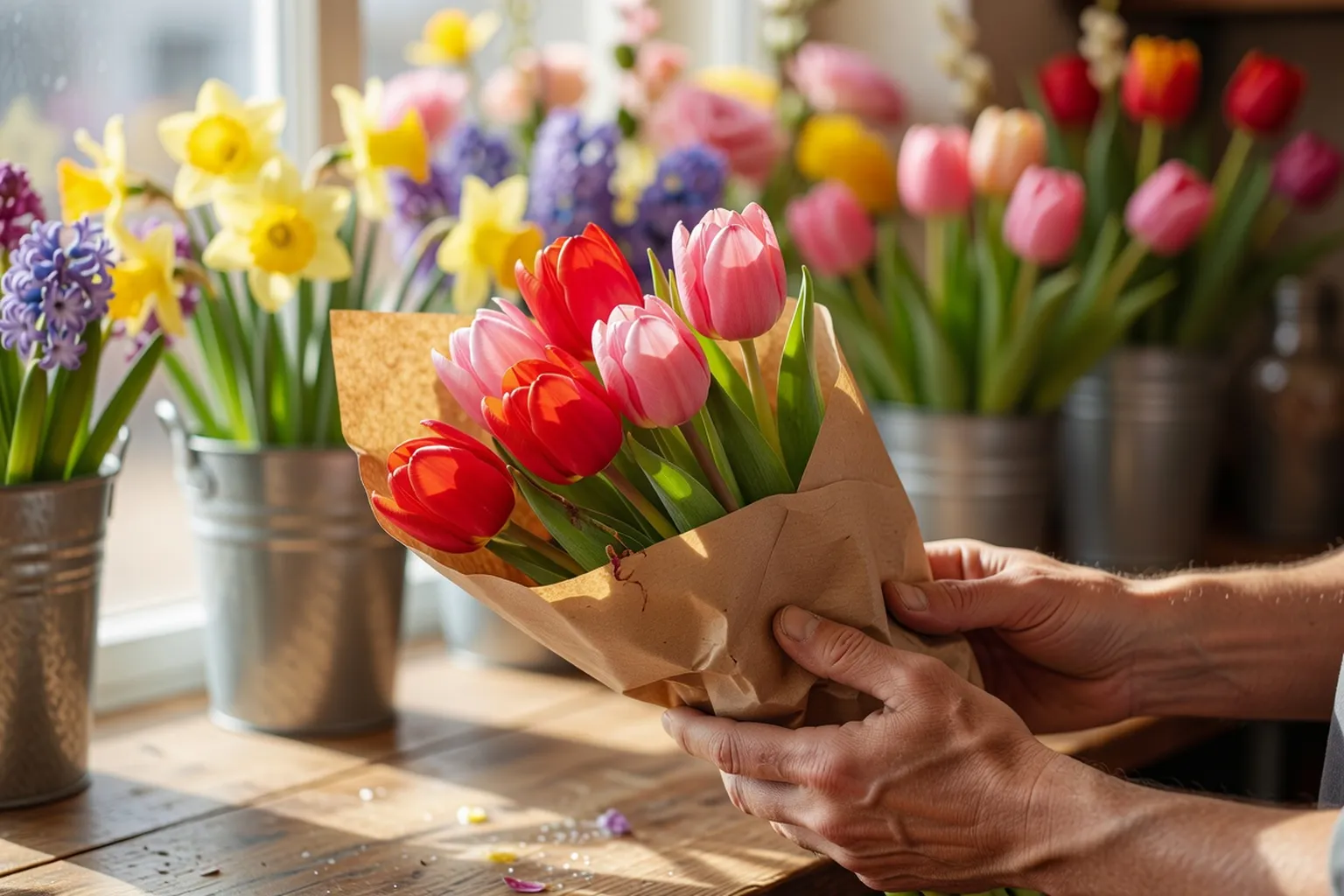
The central flower rule is simple: give an odd number for birthdays, dates, family visits, March 8, and other happy occasions. Even numbers are conventionally associated with funerals and memorials.
For a small bouquet, count the stems: three, five, seven, or another odd number is appropriate. Large florist arrangements are treated more flexibly, but there is no reason to rely on that when a florist can prepare a suitable bouquet.
For an ordinary date, three, five, or seven stems can be enough. For birthdays, anniversaries, and major holidays, choose the size to match the occasion and her taste, not as a display of money.
For her mother, five, seven, nine, or a fuller florist-designed bouquet is usually better than a single rose. It is a sign of respect, not payment for hospitality. Ask the florist for a bouquet suited to the occasion, whether it is a family visit, birthday, date, or holiday.
Yellow flowers require judgment. A popular superstition links them with jealousy or separation, so many people avoid them as romantic gifts. The belief is not universal, and some women genuinely love yellow flowers. Unless you know she likes them and does not attach that meaning to them, choose another color for a date, apology, anniversary, or March 8.
Avoid artificial flowers and deeply somber arrangements for a first family visit. Fresh seasonal flowers, tulips, roses, peonies, or a simple mixed bouquet are easier choices.
What to give a Russian girlfriend or wife
Flowers are reliable, but they should not be the only thing you give. Your girlfriend will notice whether a present reflects her tastes, conversations, and daily life.
For an early relationship, safe choices include:
- An odd-number bouquet in colors she likes
- Good chocolates or a dessert from a place she enjoys
- A book, accessory, scarf, or item connected to an interest she has mentioned
- Perfume only if you know her preferred scent
- A small experience or thoughtful item that shows you listened
Do not chase a stereotype of what “Russian women want.” A gift tied to books, travel, cooking, music, sport, beauty, or a specific hobby will usually beat another generic bouquet.
Price matters in early dating. A costly phone, luxury handbag, major jewelry piece, or cash-equivalent gift may create pressure or look like an attempt to speed up the relationship through spending. Quality is not the problem; proportion is. A bouquet, a book she wanted, a quality scarf, or tickets to something she enjoys says, “I listen.”
Remembered details matter more than price. A favorite author, tea she misses, a neglected hobby, or music she loves gives you material for a personal gift without becoming intrusive. A handwritten note can add real weight to an ordinary item.
Perfume and cosmetics require care. Perfume can be excellent for a wife, fiancée, or girlfriend whose preferences you know, but it is risky early on. Cosmetics depend on skin type, sensitivities, routines, shades, and brand preferences. If you do not know what she uses, choose flowers, chocolates, a book, or a personal accessory instead.
For a wife, jewelry may suit a significant anniversary, but it should fit her style and connect to your relationship rather than merely its price. During an engagement or wedding period, expectations may become more formal and family-centered. Our guide to Russian wedding traditions provides useful context before a grand gesture.
Meeting her parents: gifts that show good judgment
A first meeting with her parents is not the moment to arrive with costly packages. You are establishing warmth and respect, not resolving every question about your future in one evening.
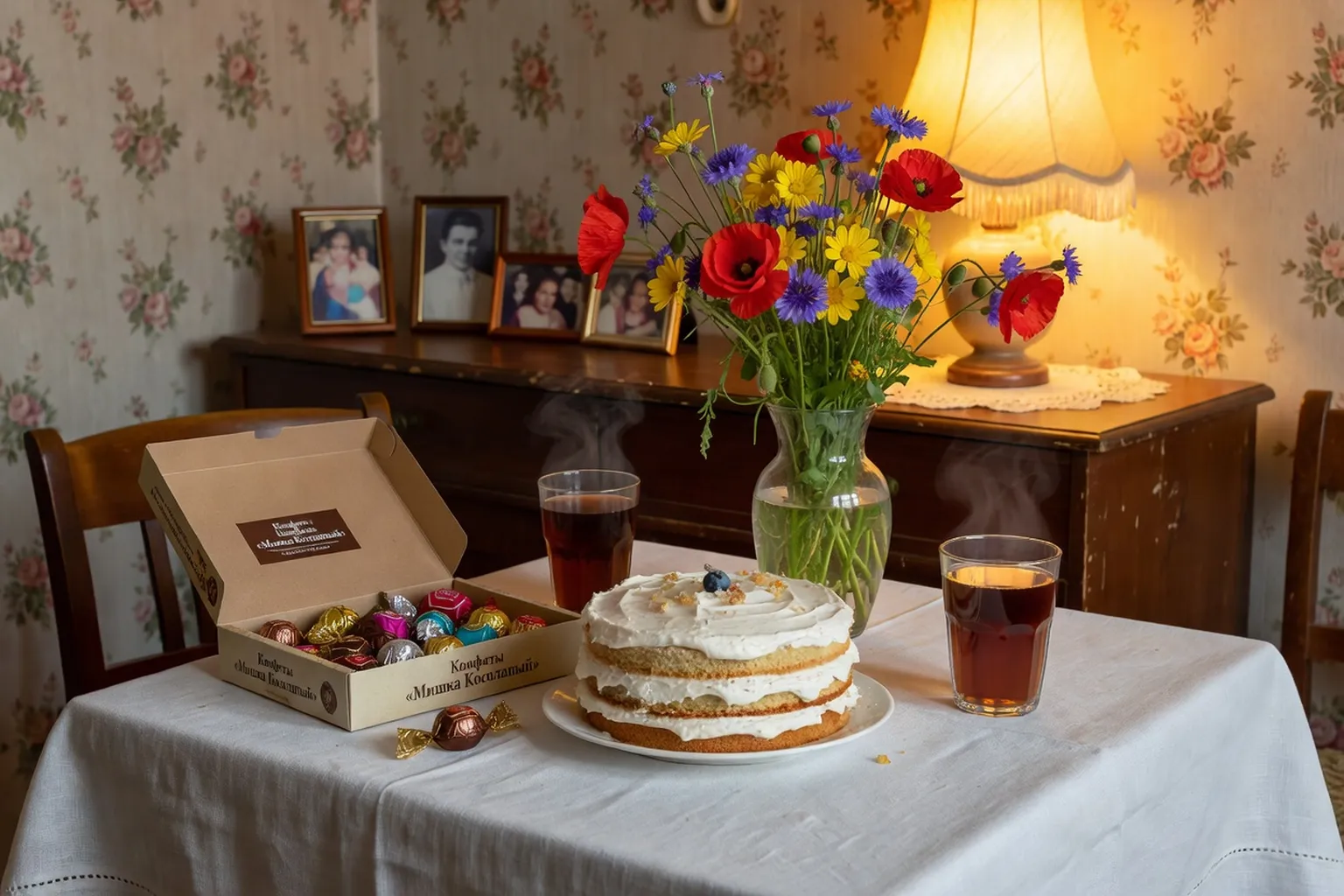
A practical combination is an odd-number bouquet for her mother or the household, good chocolates, and something for the table. If you know the family drinks alcohol, a modest bottle can work. If not, choose pastries, cake, fruit, quality tea, coffee, or a tasteful souvenir from your country.
Avoid highly personal gifts for parents you have not met: clothing, perfume, cosmetics, grooming products, and anything that assumes their body, taste, age, or health. Cash can feel transactional or patronizing. Expensive branded goods are rarely needed and may make a modest household uncomfortable.
Alcohol is never mandatory. Some families drink wine, champagne, cognac, vodka, or beer socially; others do not drink at all or prefer not to have it in the home. If you are unsure, bring cake, pastries, fruit, tea, coffee, chocolates, or a local item instead.
Give the bouquet to the mother or designated host upon arrival. Offer food or the host gift after greetings: “Thank you for inviting me; I brought something for the table.” Do not thrust a bag forward from the doorway or make a performance of the gift.
Keep souvenirs modest, local, food-related, or representative of where you live. They should start conversation, not advertise status. Before the visit, read our advice on meeting your Russian girlfriend’s family so the gift is part of a respectful first impression rather than your entire plan.
The Russian gift calendar: dates worth remembering
Russian gift-giving is not evenly spread across the year. New Year carries more weight than many Western visitors expect, while Orthodox Christmas is often more religious and less centered on presents.
| Occasion | Date or timing | What it means for gifts |
|---|---|---|
| New Year | January 1; presents commonly exchanged around midnight on December 31 | The primary secular family gift holiday. Families gather around a decorated tree and exchange presents. Plan ahead if you are spending it with her family. |
| Orthodox Christmas | January 7 | A religious holiday centered on church and family meals, generally less present-focused than New Year. A thoughtful small gift may be welcome, but do not assume a large exchange. |
| Maslenitsa | February 16–22, 2026 | Blini week, with visiting relatives and outdoor festivities. Food, hospitality, and joining in matter more than formal presents. The final Sunday is Forgiveness Sunday. |
| Defender of the Fatherland Day | February 23 | Now broadly observed as a men’s day. Gifts may go to fathers, partners, sons, and colleagues regardless of military service. Typical choices include food, alcohol, clothing, grooming products, gadgets, and practical items. |
| International Women’s Day | March 8 | A major public holiday. Flowers, chocolates, perfume, and small presents are commonly given to partners, mothers, grandmothers, daughters, colleagues, and teachers. |
| Easter | Date varies | Kulich and painted eggs are associated with the holiday. Family and religious practice vary, so follow the household’s lead. |
| Name days | Vary by person and calendar | Some people observe imeniny, or name days. If her family marks them, a small greeting or gift is thoughtful. |
For a French-language reference beyond the dates above, our partner site les-femmes-russes.fr publishes a detailed calendar of Russian and Orthodox holidays for Franco-Russian couples.
New Year needs special planning. If you are with her family, expect a decorated tree and presents to be part of December 31. Gifts for more than your partner may be appropriate.
March 8 is also widely observed. Flowers are the clearest gesture, with tulips and roses common alongside chocolates, perfume, or a small present. Ignoring the day entirely when you have a Russian partner can feel conspicuous.
Gift taboos and superstitions: real beliefs, not universal law
Gift superstitions are folk beliefs, not a legal code. Some families follow them closely; others laugh at them. A sensible partner does not dismiss them when a simple adjustment avoids discomfort.
Sharp objects, including knives, are often said to symbolically “cut” a relationship. If giving a knife or another sharp item, accept a small coin in return. It turns the gift into a symbolic purchase and neutralizes the omen.
An empty wallet or purse can symbolize poverty. Put at least one coin inside before wrapping it.
Other, less consistent beliefs include handkerchiefs or pearls being associated with tears, watches being a weaker taboo for some people, and yellow flowers suggesting separation or jealousy in a romantic context.
These associations do not ban entire gift categories. A woman who loves pearl jewelry may not care, and a watch can be welcome. Ask your partner or choose something else if her family is traditional about such matters.
Long-distance gift-giving: sending gifts from abroad in 2026
Sending gifts to Russia from abroad requires planning. Sanctions, banking restrictions, changing customs practices, suspended routes, and payment limits can affect parcels and online purchases.
Reliability matters more than theoretical value. Start early: order or ship well before birthdays, New Year, and other holidays. Check current restrictions, duties, and recipient paperwork. Avoid cash, valuable jewelry, prescription items, expensive electronics, and anything likely to create customs uncertainty.
Where possible, use local delivery options that accept a payment method available to you. Flowers, cakes, gift baskets, books, sweets, and locally sourced gifts are often easier than international parcels. Verify delivery areas, payment options, recipient contact requirements, and refund terms before ordering.
A trusted local friend or family member may be more useful than an elaborate international plan. Books, flowers, a favorite dessert, or a small item from a domestic retailer can feel meaningful without crossing a border. If you cannot buy securely and reliably, choose another route.
Wrapping, presentation, and whether gifts are opened
Presentation matters because a gift is also a gesture. A neatly wrapped item, clean gift bag, or bouquet without damaged packaging makes a better impression than something left in a shop carrier bag.
Use clean paper, a simple ribbon, or a well-kept gift bag. Gift bags are fine for informal visits and awkward items. Paper wrapping can feel more deliberate for an anniversary, special romantic gift, or formal family celebration.
For a first meeting with parents, avoid flashy or excessively romantic packaging. Glitter-heavy paper, giant bows, novelty designs, and packaging that advertises price can feel out of place. Food for the table does not need theatrical wrapping; it should simply be neat and easy for the host to handle.
Remove price tags, keep receipts private, and do not announce what you spent. Do not insist that a recipient open a gift immediately or hover for a reaction. Some people unwrap at once; others put the gift aside while guests arrive or dinner is served. Both are normal.
Hand the gift over naturally, say a few warm words, and let the recipient decide what happens next. At New Year, follow the household’s rhythm; some families open gifts formally around the tree, others do it informally.
A short checklist for your first family visit
Before leaving, cover these basics:
- Confirm who will attend and whether children or grandparents will be there.
- Do not arrive empty-handed for a first visit, dinner invitation, or holiday gathering.
- Bring an odd-number bouquet for her mother or the host.
- Add chocolates, pastries, cake, fruit, tea, coffee, or another modest shareable gift.
- Ask whether the family drinks before bringing alcohol.
- Avoid cash, clothing, perfume, cosmetics, and expensive branded goods for parents you have not met.
- Put a coin in a wallet; accept a symbolic coin for a knife or other sharp gift.
- Remove price tags, use neat wrapping, and do not insist anyone open a gift immediately.
Gifts during ordinary life, engagement, and family celebrations
Not every gift needs a holiday. Flowers after a difficult week, a dessert she likes, or a book related to a conversation can be more intimate than a predictable expensive annual present because it shows steady attention.
That does not mean creating an expectation of constant spending. A thoughtful inexpensive item is usually better than a grand gesture that makes the relationship feel transactional.
When an engagement, wedding preparation, anniversary, or first major family celebration approaches, check expectations early. Families may have their own habits about who gives what, what belongs on the table, and whether gifts should be practical, symbolic, or simply celebratory.
For major family events, think beyond the couple. A birthday dinner for her mother, New Year with her parents, or an anniversary gathering may call for a host gift alongside a personal gift for your partner. If unsure whether separate gifts are expected, ask.
Learning some vocabulary can help when relatives discuss dates and celebrations. Our glossary of Russian marriage terms can make those conversations less opaque.
The lesson is straightforward: bring something when invited, choose flowers carefully, respect a few familiar folk beliefs, and never use money as a substitute for attention. They will not expect you to know every custom on day one. They will notice a sincere effort.
Frequently Asked Questions
Should I bring a gift when visiting my Russian girlfriend's parents?
Yes. For a first visit or meal, arrive with a modest host gift such as chocolates, cake, pastries, fruit, wine if the household drinks, or flowers in an odd number.
Why must flowers be in an odd number in Russia?
Odd numbers are customary for happy occasions. Even-numbered bouquets are conventionally associated with funerals and memorials.
Are yellow flowers inappropriate for a Russian girlfriend?
Yellow flowers are linked in popular superstition with jealousy or separation. Many people avoid them for a romantic gift, though the belief is not universal.
What is the main Russian gift holiday?
New Year is the main secular family gift holiday. Families gather around a decorated tree and exchange presents as the New Year arrives.
Can I give a Russian woman a wallet or knife?
You can, but folk beliefs attach conditions. Put a coin inside a wallet to avoid the symbolism of poverty. If giving a knife or other sharp object, accept a small coin in return so it becomes a symbolic purchase.