 EN
EN ES
ES FR
FR RU
RU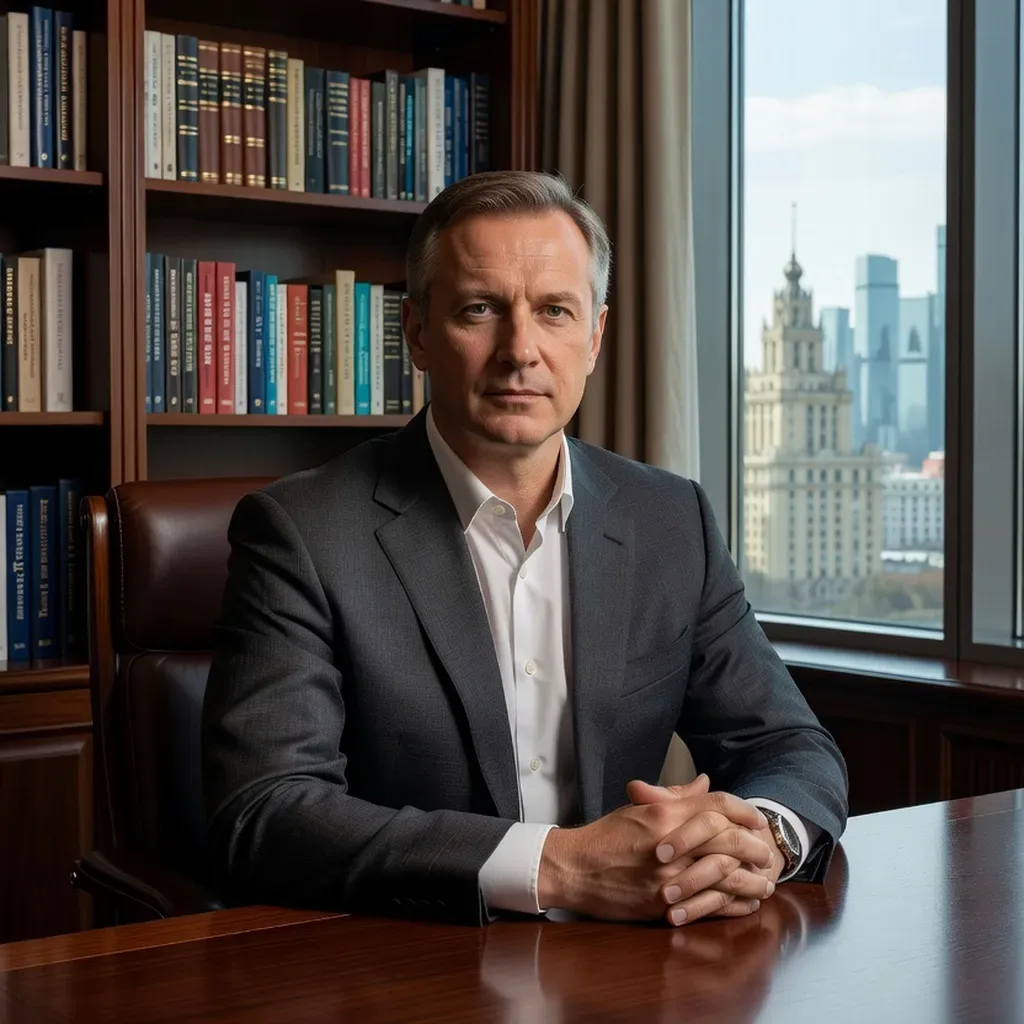
Sergei Kuznetsov, 52, has directed a mid-sized matrimonial agency in central Moscow since 2008. A former investment banker, he reinvented his career after open-heart surgery at 38 and built one of the most respected names in the Russian-Western matchmaking sector. His clientele today is roughly 60% Western European men (mostly German, French, and Italian) and 40% North American, looking to meet Russian women aged 28 to 45 from Moscow, Saint Petersburg, and the regional capitals.
We met him in his office near Tverskaya Street in May 2026 for a frank conversation about the realities of the industry — verification, scams, what works, what does not, and what Russian women actually want from a Western husband in 2026. The conversation has been edited for clarity and length.
From investment banking to matchmaking
Why did a former banker enter the matrimonial agency business?
In 2007 I had open-heart surgery at thirty-eight. When you wake up from that, you reassess what you want to do with your remaining decades. Banking had given me money but no human satisfaction. My sister had married a Frenchman a few years earlier through an introduction agency, and I had seen up close how badly the industry treated its clients. There were good intentions but no professionalism. I thought I could do it differently — with the same rigor I had applied to financial due diligence.
I opened the agency in 2008 with three colleagues. We have grown carefully since then. We never expanded beyond what our verification team could handle. Today we manage around 800 active female profiles at any given time, and we accept perhaps one new client out of three who applies. The selection on both sides is what keeps the matching quality high.
The verification process today
Walk us through how a woman is verified before she is presented to a client.
Five steps, in this order. First, she comes to the office in person with her internal Russian passport and the international passport if she has one. We make a copy and we take a live photograph in front of us, holding her ID. Second, she provides a notarized document from the civil registry confirming her marital status — single, divorced with date of divorce, or widowed. We will not register a woman who has not produced this document.
Third, we conduct a one-hour interview with one of our consultants. The interview covers her motivation for matrimonial inscription, her professional life, her family, her children if she has any, her religion, her view of relocation abroad, her health, her language abilities. We are not gatekeepers of personality, but we filter for serious matrimonial intent versus what we call internally “tourists” — women who want to be flattered without committing to anything.
Fourth, we ask for two references, typically a close colleague and a long-time friend. We call them. This step alone removes many candidates who do not have a stable social network to vouch for them. Our Russian marriage agency guide 2026 details how to spot agencies that skip this kind of due diligence.
Fifth, before a client receives her contact information, we hold a video call with her in our office, with the client present, in real time, with the woman in the room with our consultant. This is the moment where any remaining doubt on identity disappears. Some clients are surprised that we have not given them her direct phone number on day one. We explain that this is precisely why our success rate is what it is.
The typical female client
What does the typical woman registered at your agency look like in 2026?
Average age thirty-two. Eighty percent are university graduates, half hold a master’s degree or higher. Around sixty percent have been married once and are divorced; thirty-five percent have one child, ten percent have two. Almost all of them work — managers, doctors, engineers, teachers, accountants, marketing professionals. Average net monthly salary is between eighty and one hundred fifty thousand roubles, which in Moscow gives them autonomy but not luxury.
They are not financially desperate. The cliché of the Russian bride looking for a richer husband to escape poverty is fifteen years out of date for serious agencies. The women I register today own or are buying their apartment, have a stable job, and have already tried the Russian dating market intensively. The Russian dating market for women over thirty is brutal — there are statistical and cultural reasons for that — and many of my clients arrive after a series of disappointing experiences with Russian men who refused to commit. They are looking for someone serious. They are not looking for a savior.
The top three reasons couples fail
Of the couples your agency has helped to marry over seventeen years, why do those that fail, fail?
Three reasons recur, in this order of frequency.
First, the cultural adjustment is underestimated by both sides. A Russian woman who relocates to Frankfurt or Lyon will go through professional regression, language fatigue, and family distance — sometimes all at once. The husband sees that she has a comfortable house and a loving relationship and does not always understand why she sometimes cries at night for no apparent reason. I refer our couples to intercultural coaches like Olga Sokolova, and the couples who follow up have a noticeably better outcome.
Second, the couple skips premarital preparation because they assume that love will solve everything. It will not. Love is necessary but not sufficient. Couples who do five or six sessions of premarital coaching before the wedding, where they discuss money, parenting, in-laws, religion, and career, have a much better five-year survival rate.
Third — and this is harder to say — some agencies oversell compatibility to close the sale. They tell the man and the woman everything will be wonderful. We try to do the opposite. We give the couple a frank picture of the difficulties they will face. Couples who marry knowing the real risks navigate them better than couples who marry believing they will not have any.
On scams and bad actors in the industry
Romance scams are a notorious problem in this sector. What is the truth in 2026?
Romance scams remain a significant problem on free dating sites and on cheap agencies that do not verify profiles. They are essentially non-existent at agencies with our level of verification, because no scammer would invest the time and exposure required to pass our five-step process.
The typical scam pattern in 2026 is the same as a decade ago: a profile that responds quickly with emotional intensity, an emergency that requires money — a relative in hospital, a visa fee, a plane ticket — and a refusal to do live video calls. Any combination of these signals should end the relationship immediately. A genuine candidate from a serious agency will never ask you for money. Ever.
The harder case is what I call the soft scam: a real woman, who is single, who is registered on a free dating site, who is not particularly interested in any one man but enjoys the attention and small gifts from several. She is not a criminal, but she is not a serious matrimonial candidate either. Our verification process filters her out. Free dating platforms do not.
The economics of the agency
How does a serious Russian marriage agency make its money?
Client-side, exclusively. Women pay nothing — not to register, not for their profile to be visible, not for introductions, not for translation. Charging women would distort the candidate pool in obvious ways and is a classic sign of a bad agency. If a Russian woman ever tells you that an agency asked her for money to register her, that agency is not serious.
Men pay membership fees, introduction fees, translation services, and trip coordination. Our entry membership is around €2,500 for twelve months, which gives access to the database and three guaranteed introductions. Active matchmaking with concierge service can reach €15,000 over twenty-four months. We charge for outcomes more than for time — if a client does not meet anyone of serious interest in his first six months, we extend his membership for free.
What Western men still get wrong
After seventeen years, what mistakes do you still see Western men make?
Three. They imagine the Russian woman is looking for a savior. She is not. She is looking for a partner who is calm, financially stable, and emotionally available. The savior fantasy puts the woman in a subordinate position from day one, which serious candidates immediately recognize and reject.
They underestimate how much the woman is risking. She is leaving her country, often her career, her language, her parents, her friends — for a man she has known for a few months in person. The man is risking comparatively little. He should arrive at the marriage with the humility this asymmetry deserves.
They wait too long to talk about practical questions. Money, children, in-laws, religion, where the couple will live in five and ten years — all of these should be discussed before the marriage, not after. Russian women are pragmatic about these conversations. Russian-speaking matchmakers are surprised by how often Western clients want to defer them.
Three real cases
Without breaking confidentiality, can you share three cases that illustrate the range?
Yes, with names changed. Case one: a German engineer, fifty-one, divorced, two adult children. Married a Saint Petersburg pediatrician, forty-three, divorced, one teenager. Five years in, they live near Hamburg, she has requalified as a doctor in Germany, the teenager went to university there, the marriage is solid. They followed our preparation program and stayed in touch with a coach for the first three years.
Case two: a French entrepreneur, forty-six, never married. Married a Moscow lawyer, thirty-five, divorced, one child. Within eighteen months they divorced. He had expected her to leave her profession and become a Lyon housewife. She had assumed he understood she would continue her career. Neither side had really discussed it before the wedding. Both said afterward they should have done premarital coaching.
Case three: an Italian doctor, forty-four, widower with two young children. Married a Yekaterinburg English teacher, thirty-nine, never married, no children of her own. She became the mother of his two children, integrated into a small Italian town with surprising grace, and they had a child of their own. Eight years later, they are still together. He said the agency had told him very honestly that the most important quality for his situation was emotional maturity, not the youngest or prettiest candidate. He took that advice seriously.
Advice to a man starting from zero
A Western man reads this and wants to start exploring. What does he do?
Take six months before contacting any agency. During those six months, do three things. Read seriously about Russian culture, history, and the realities of Russian women’s lives today. Take basic Russian language classes — even fifty hours will make an enormous difference. And do honest self-reflection about why you are turning toward Eastern Europe rather than your own dating market. The answers to that last question will determine whether you arrive at the agency as a serious candidate or as a tourist.
Then choose two or three agencies with verifiable physical addresses in major Russian cities or with reputable Western European headquarters. Read their verification process carefully. Ask them detailed questions before paying. A serious agency will gladly answer; a cut-rate intermediary will rush you to pay.
Plan to invest at least eighteen months and a budget between €5,000 and €12,000 minimum. Travel to Russia (or to the agency’s secondary location) twice in the first year. Meet at least three or four candidates in person before forming a serious connection. And once you have met someone serious, slow down rather than speed up. The couples who marry within six months of meeting have the highest divorce rate in our database. The couples who take eighteen to twenty-four months have the best outcomes. Compare with our comparison of agencies in Russia versus Ukraine if you are still hesitating between the two markets.
A serious matrimonial agency is not a shopping platform. It is a long-term consulting service that happens to involve introductions. The agencies that survive twenty years in this industry, on either the Russian or the Ukrainian side, share one quality: they treat the marriage as a long-term outcome to be earned, not a transaction to be closed.
Discover the typical female profile in detail in our complete Slavic brides guide, and consult the CQMI Franco-Russian matrimonial agency in Quebec for those exploring the Canadian and French routes, or browse independent reviews on topdatingreviews.com before making any commitment.
Frequently Asked Questions
How do serious Russian marriage agencies verify a woman's identity in 2026?
Three layers are now standard: government ID with a live selfie taken in the agency office, a notarized civil status certificate confirming she is single or divorced, and a video introduction call conducted in person before any client receives her contact information. Some agencies also run an Interior Ministry background check through licensed third parties. Any agency that cannot describe its verification process in detail should be considered unreliable.
Why do many international couples meeting through Russian agencies eventually fail?
Three reasons recur. The man underestimates the cultural adjustment required from his future wife after relocation — career setbacks, language fatigue, family distance. The couple skips premarital coaching because they assume love will solve everything. The agency oversold compatibility instead of giving the couple a realistic picture of the differences they would have to navigate. Couples who acknowledge these risks before marrying have a much higher five-year survival rate.
Do women pay anything to be registered at a serious Russian matrimonial agency?
No. The revenue model in serious agencies has always been client-side: men pay for searches, introductions, translation services, and trip coordination. Women pay nothing because charging them would distort the candidate pool and incentivize agencies to register profiles without serious matrimonial intent. If a woman tells you the agency asked her for money to be listed, the agency is not serious.
What does a typical female candidate at a Moscow marriage agency look like in 2026?
Average age 32, university-educated, often divorced once with one child, working as a manager or specialist with a monthly net salary between 80,000 and 150,000 roubles. Most own or are buying their apartment. They are not financially desperate; they are looking for emotional stability and a serious partner, often after experiencing the limits of the Russian dating market for women over thirty.
How should a Western man recognize a romance scam on Russian dating platforms?
Red flags include profiles that respond too quickly with deeply emotional content, requests for money within the first three months for any reason (medical emergency, sick relative, visa, plane ticket), refusal to do live video calls, and claims that the agency or a third party is preventing the woman from communicating freely. A genuine candidate at a serious agency will never ask you for money.
What is the typical budget for a man working with a Russian marriage agency from first contact to marriage?
Between €4,000 and €15,000 over twelve to twenty-four months. This includes agency membership fees, translation and introduction services, two or three trips to meet candidates in person, visa processing for the woman, and small celebrations. Premium concierge agencies in Moscow can run to €25,000 or more. Below €3,000, you are either on a dating site without real agency services or with a cut-rate intermediary cutting corners on verification.
Can Western men still travel to Moscow for matrimonial meetings in 2026?
Yes, but the logistics have shifted. Direct flights from most Western European countries no longer exist. Most clients now transit via Istanbul, Dubai, or Belgrade. Visa processing takes longer than before 2022. Many agencies have set up parallel operations in Belgrade, Tbilisi, or Limassol where they organize introduction trips for clients who prefer not to travel into Russia directly. Both options remain viable.