 EN
 ES
 FR
 RU
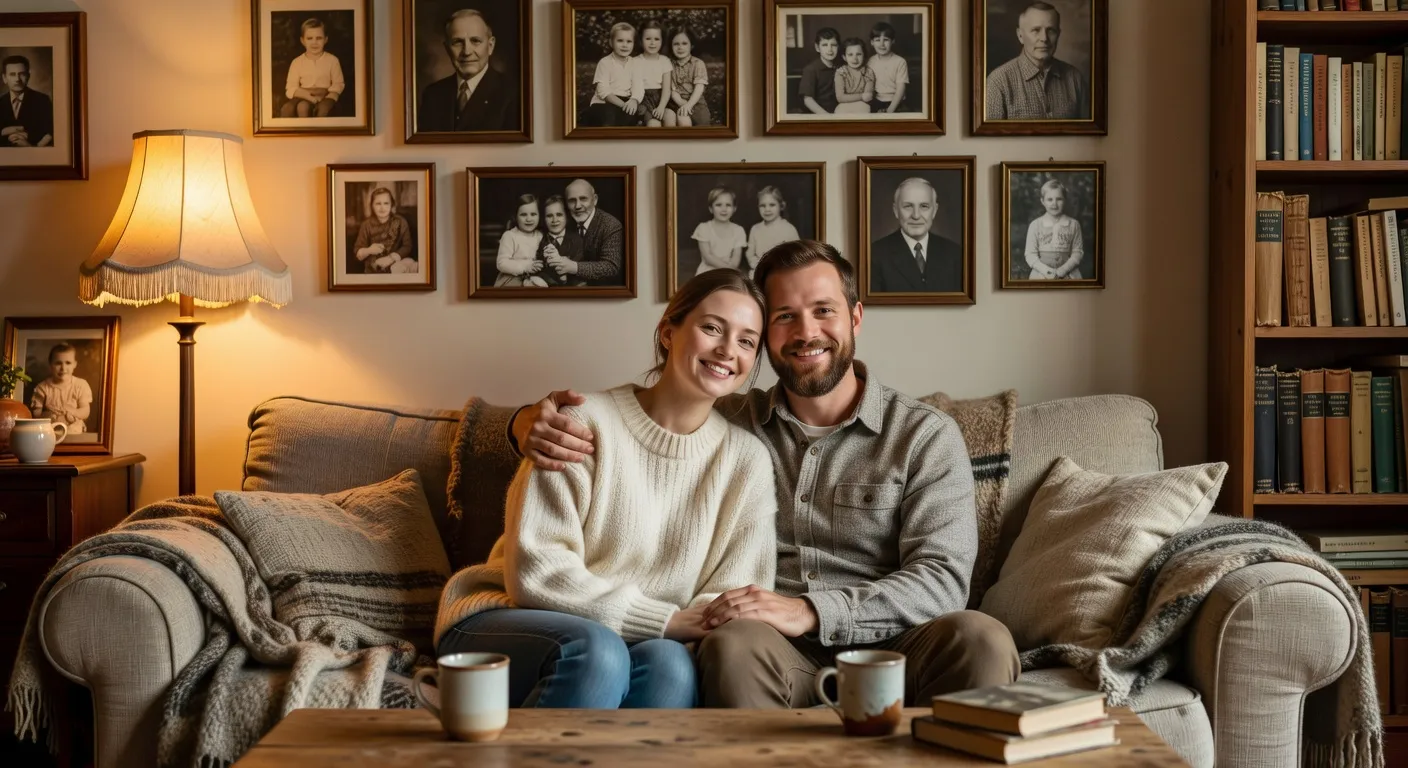
When international marriages come up, the warnings are what you hear most often: culture shock, the language barrier, homesickness, paperwork difficulties. All of this is true, and it is important to know about these challenges. But there is another side of the coin: thousands of happy families in which Russian and Ukrainian women found exactly what they were looking for: love, respect and a true partnership.
In this article we tell four stories. They differ in circumstances but share a common thread: a conscious choice, patience and a willingness to work on the relationship. Names have been changed for confidentiality, but the details are based on the real experience of couples who met through international marriage agencies.
These stories are not promotional videos in which everything is perfect from the first minute. Each couple went through its own difficulties. But that is exactly what makes their experience truly valuable for those standing at the beginning of this path.
1. Marina and Pierre: from Moscow to Lyon
Marina was 34 when she decided to turn to a marriage agency. A programmer by training and successful in her career, she could not find a partner in Moscow who shared her values. “Men my age are either already married or not ready for a serious relationship,” she recalls.
Pierre, a 42-year-old engineer from Lyon, turned to the same agency with a similar problem. His previous marriage had fallen apart, and he was looking for a woman who valued family and was ready for a real partnership. “French women in my circle seemed too career-oriented for family life,” he explains.
Their first video call lasted three hours. “We spoke in a terrible mix of English and French, used Google Translate and drew on paper when words ran out. But we laughed, and I felt that this man was genuine,” Marina says.
Difficulties and how they overcame them
After four months of online communication, Pierre came to Moscow. The meeting confirmed what they had felt from a distance. After that, however, the difficulties began: processing the documents took eight months, and the move to Lyon turned into a severe culture shock.
“For the first six months I cried every evening,” Marina admits frankly. “Not because Pierre was bad, but because everything was foreign. The language, the city, the people. I could not even go to the pharmacy without him.” But she enrolled in intensive French courses, found a Russian-speaking group in Lyon and gradually gained confidence.
Today, three years later, Marina works as a programmer at a French IT company, speaks French fluently and is raising a daughter with Pierre. “The most valuable thing about Pierre is that he sees me as an equal. We make all decisions together, and for the first time in my life I feel like a full partner, not like service staff.”
2. Olga and Mark: a second chance at happiness
Olga was 40, with two children from her first marriage and a traumatic experience of divorce. The idea of an international marriage seemed unrealistic to her. “Who needs a divorced woman over forty with two children?” she thought. A friend who had married a Canadian convinced her to try.
Mark, a 48-year-old teacher from Montreal, had never been married. He dreamed of a family but could not find a suitable partner in Canada. When he saw Olga’s profile, he was drawn to her honesty: “She did not try to look younger or hide her children. She wrote: this is who I am. And that is exactly what won me over.”
Their acquaintance developed slowly: a whole year of video calls before Mark came to Kyiv. “I wanted to be sure it was serious before introducing him to the children,” Olga explains. Mark met her sons only on his second visit, and patiently earned their trust.

A new life in Canada
The move to Montreal with two teenage children was not easy. But Mark turned out to be the person Olga had been looking for: patient, attentive and ready to be a real father to her sons. “He helps them with homework, takes them to hockey and in two years has never once said the word ‘strangers’. For him they are his family.”
Olga is now studying in a nursing program: her medical education from Ukraine required additional certification in Canada. “It is a long road, but Mark supports every step I take. He says: ‘You are a smart woman, you will make it.’ And I believe him, because he shows it through actions, not only words.”
3. Tatyana and James: when distance is no obstacle
Tatyana from Novosibirsk and James from London met through an international dating site. Their story began unusually: Tatyana, an English teacher, was the first to write to James, correcting a grammar mistake in his profile. “He was not offended. He laughed and wrote: ‘I definitely need a woman who will correct my mistakes,’” Tatyana smiles.
For two years they communicated from a distance. James flew to Russia four times, Tatyana to London twice. “We did not rush,” James says. “It was important to me that Tatyana felt confident in her decision. Moving from Siberia to London is a huge step, and it must be voluntary and conscious.”
Tatyana had it easier than many: she spoke English fluently, which made adaptation much easier. But culture shock caught up with her anyway. “The English are very polite, but behind that politeness it is hard to understand what they really think. It took me a year to learn to ‘read between the lines.’”
Today Tatyana works as a Russian teacher at a London school and runs a private online practice. “My skills turned out to be in high demand. Many English people want to learn Russian, and my teaching experience from Russia is my competitive advantage.”
4. Natalya and Jan: a story that began with doubts
Natalya from Saint Petersburg doubted for a long time whether she should turn to a marriage agency. “It seemed to me like something humiliating, as if I could not find a husband myself,” she admits. But after several years of failed attempts on ordinary dating sites, she decided to try a professional approach.
Jan, a 45-year-old architect from Amsterdam, turned to the agency on the recommendation of a friend whose marriage to a Russian woman had turned out happy. “I wanted a woman who values family relationships and is ready to build something real. My friend said Russian women are different: warmer, more devoted. I decided to check for myself.”
The agency arranged their first meeting in Saint Petersburg. “I expected someone boring and calculating,” Natalya laughs. “Instead I saw a man with kind eyes who was sincerely interested in what I was saying. He asked questions not about my looks but about my dreams and plans.”
Adapting in the Netherlands
The move to Amsterdam turned out to be a fascinating adventure for Natalya. “The Dutch are the most open and tolerant people I have met. Nobody here is surprised by an international couple. We were accepted as one of their own from the first day.” Natalya learned Dutch in a year and a half and now works at a design studio.
“The most surprising discovery for me is how Jan views marriage,” Natalya says. “For him it is a partnership, not a hierarchy. We discuss everything, from choosing furniture to planning a vacation. He never says ‘I have decided’. It is always ‘let’s decide together.’”
5. Common lessons: what happy couples have in common
After analyzing dozens of success stories, we can identify several patterns shared by happy international couples.
Realistic expectations. None of these women went abroad for a “beautiful life”. Each understood that moving is hard work, that culture shock is inevitable and that perfect men do not exist. This honesty with themselves allowed them to see the real person behind the illusions.
Patience and gradual progress. All the couples gave the relationship time to develop naturally. Nobody rushed the move or the wedding. The courtship period lasted from one to two years, enough to really get to know a person.
Actively learning the language. Each woman seriously studied the language of her husband’s country, some before the move, some right after. This proved to be a key factor in successful adaptation and professional fulfillment.
Keeping their own identity. None of them gave up her roots. They cook Russian dishes, celebrate Russian holidays and keep in touch with family in Russia and Ukraine. And their husbands value and support this.
Professional support. Most couples met through a reliable agency that provided profile verification, organized meetings and offered support at every stage. Read more about choosing an agency in our guide to choosing a marriage agency.
Key takeaways
- Marina was 34 when she decided to turn to a marriage agency.
- Tatyana from Novosibirsk and James from London met through an international dating site.
- Natalya from Saint Petersburg doubted for a long time whether she should turn to a marriage agency.
- Based on the experience of happy couples, we have put together practical recommendations for women who are thinking about an international marriage.
6. Advice for women considering this path
Based on the experience of happy couples, we have put together practical recommendations for women who are thinking about an international marriage.
Do not idealize the West or Western men. There are good and bad people there, as everywhere. Your task is to find the person who is right for you, not an “ideal foreigner”.
Start with self-analysis. What do you really want from marriage? What are your non-negotiable values? On which issues are you ready to compromise? Honest answers to these questions will help both you and the agency find a suitable partner.
Invest in yourself. Learn the language, grow professionally, take care of your physical and emotional health. A man who deserves you will appreciate not only your looks but also your personality, intelligence and vitality.
Do not rush. Outside pressure (friends, parents, age) is a poor advisor. It is better to spend two years searching for the right person than to marry the first foreigner and divorce six months later.
Turn to professionals. A reliable marriage agency is not a sign of desperation but a sensible approach to the most important decision of your life. You will find a more detailed guide to the process of marrying a foreigner in our step-by-step article.
Frequently Asked Questions
How long does it usually take from first meeting to wedding in international couples?
On average, it takes 12 to 24 months from the first meeting to the wedding. This period includes online communication, several in-person meetings, preparing documents and the visa process. Couples who take their time and let the relationship develop naturally usually build stronger marriages.
What percentage of international marriages turn out to be successful?
According to research, the divorce rate in international marriages made through agencies is around 20%, which is lower than the average in most Western countries. Marriages where the partners prepared seriously and met through a professional agency have a higher chance of success.
What do all successful international couples have in common?
Successful couples share several qualities: realistic expectations, willingness to compromise, mutual respect for cultural differences, active study of the partner's language, and patience during the adaptation period. Support from both families also matters.
Should I be afraid of the language barrier at the start of a relationship?
The language barrier is a real obstacle, but not an insurmountable one. Many happy couples began communicating with the help of a translator or basic English. What matters most is a sincere desire to understand each other. A language can be learned, but emotional closeness cannot be replaced by vocabulary.
How can I prepare for an international relationship to increase my chances of success?
Start by studying the culture of your potential partner's country, learn the language, work on realistic expectations and turn to a reliable marriage agency. It is also useful to talk with women who have already gone through an international marriage to get practical first-hand advice.