 EN
EN ES
ES FR
FR RU
RU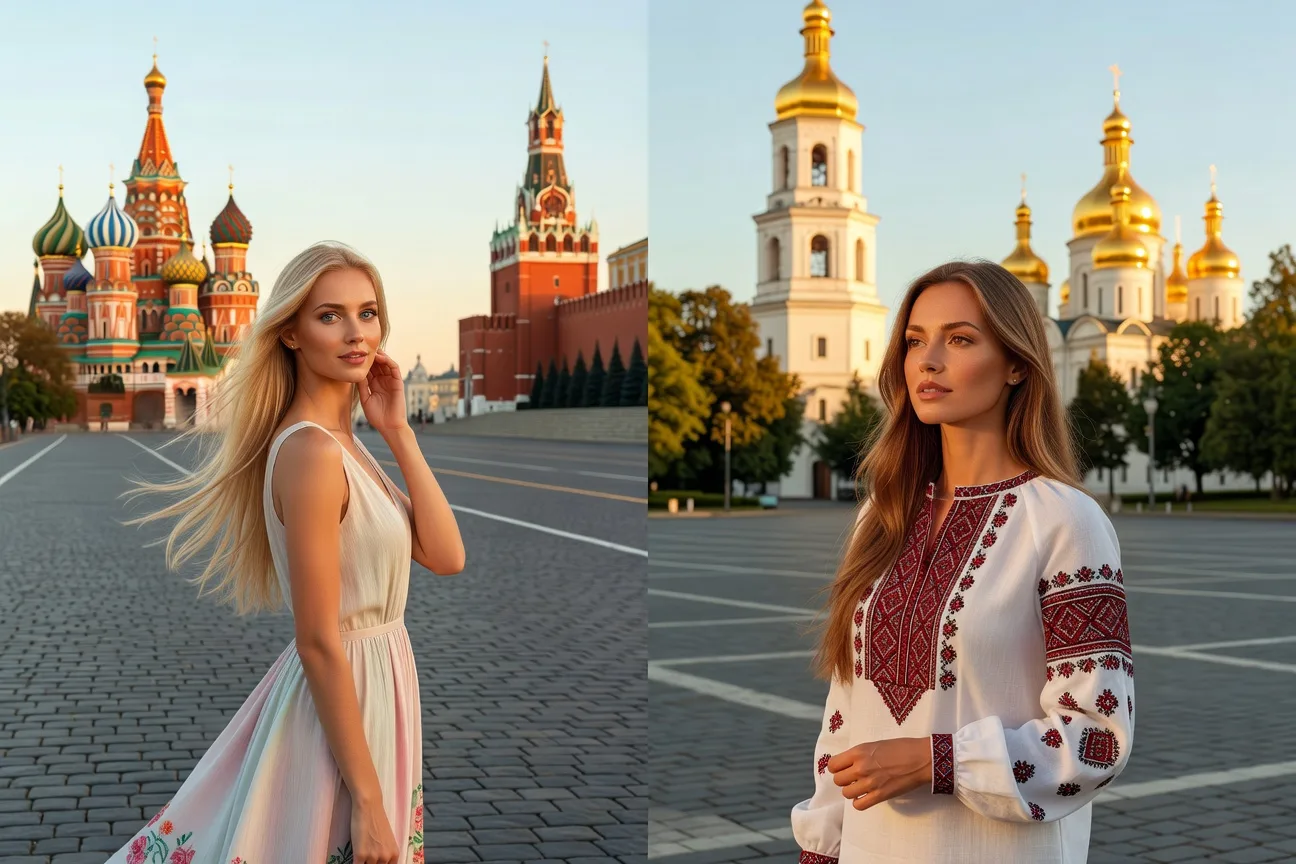
Russian vs Ukrainian Women 2026: 10 Real Cultural Differences
Comparing Russian and Ukrainian women in 2026 requires caution, nuance and honesty. The stereotypes circulating online — “Russian women are colder, Ukrainian women are warmer”, “Ukrainian women are prettier”, “Russian women are more traditional” — are reductive, frequently wrong, and hide more than they reveal. Since February 2022 the ground has shifted significantly: national identities have hardened, languages have diverged in daily use, and political sensitivity has become a genuine factor in any international relationship. For more, see our K-1 visa guide for Russian fiancees.
This article lays out 10 real, verifiable differences drawn from CQMI’s 14 years of matching experience — more than 2,500 women interviewed personally in Moscow, Saint Petersburg, Krasnodar, Kyiv, Lviv and Odessa. It avoids hierarchy (neither group is “better”) and focuses on what a Western man needs to understand before building a serious relationship with either.
1. National Identity: Europe vs. Eurasia
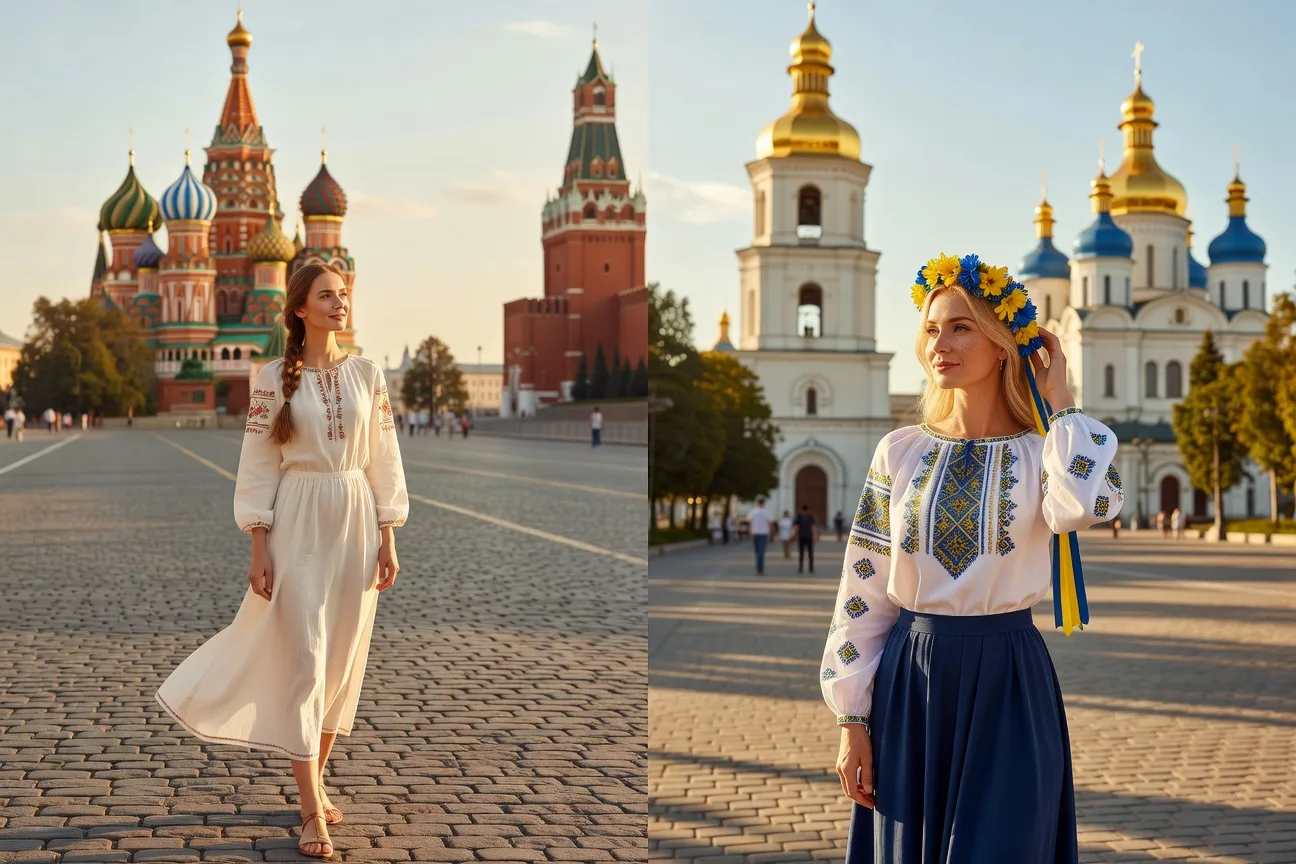
The most profound difference. Ukrainian women have, since the 2013 Maidan revolution and especially since the 2022 invasion, consolidated a European identity. They view Ukraine as a European nation historically prevented from its rightful European trajectory by Russian imperialism. They fly the blue-and-yellow flag, wear embroidered vyshyvanka shirts, use the tryzub trident symbol and consume European media (Polish, German, British).
Russian women, conversely, inhabit a more ambiguous Eurasian identity. Highly educated Moscow women are often culturally Western (literature, cinema, fashion from Paris and Milan) but politically they live in a state that defines itself against the West. The cognitive dissonance is real — many are privately anti-war but cannot express it — and shapes how they speak about politics, history and the future of their country.
Practical consequence: on a first video call, Ukrainian women will typically open with their Ukrainian identity, Russian women will typically avoid political topics altogether.
2. Language: The Ukrainianization Gap
Both groups speak Russian — it was the USSR’s lingua franca and remains common in Kyiv, Kharkiv and Odessa. But Ukrainian women under 40 increasingly use Ukrainian as their daily language. In 2026, 78 percent of Ukrainian women under 35 prefer to speak Ukrainian with their children, up from 52 percent in 2014.
Russian is still universally understood in Ukraine but socially marked. Using Russian on a first date in Kyiv can be perceived as politically tone-deaf. A Western man who learns basic Ukrainian phrases — even a few words — signals respect and will be rewarded.
Russian women, of course, speak Russian as their native language with no equivalent linguistic switch. A handful speak Tatar, Bashkir, Chechen or other minority languages from Russia’s regions, but this is rare in the marriage-agency population. For more, see our Russian marriage agency guide 2026.
3. Religion: Orthodox Diversity
Russian women are almost exclusively Orthodox Christian, under the Moscow Patriarchate, which is centralized, hierarchical and politically aligned with the Kremlin. Religious observance is typically cultural rather than devout — Easter, Christmas, baptisms, church weddings.
Ukrainian women are religiously fragmented. Approximately 60 percent belong to the Orthodox Church of Ukraine (Kyiv Patriarchate, autocephalous since 2018), 10 percent still attend the Moscow Patriarchate (now illegal in Ukraine since 2024), 20 percent are Greek Catholic (Uniate, mostly Western Ukraine), and 10 percent are secular or Protestant. Greek Catholics in particular have stronger cultural ties to Poland, Austria and the Vatican.
For a Western man from a Catholic or Protestant background, Ukrainian Greek Catholics will be the most familiar — they recognize the Pope and use a Byzantine liturgy adapted to Latin-rite sensibilities.
4. Cuisine: Shared Roots, Different Emphasis
Both cuisines share Slavic roots: borscht, pelmeni/varenyky, pirozhki/pyrizhky, kvass, black bread, dacha-grown cucumbers and tomatoes. But the emphasis diverges.
Ukrainian cuisine is richer in pork and lard (salo), more vegetables, and the borscht itself is a UNESCO-inscribed national dish since 2022 — with passionate debate over its Ukrainian origin. Expect a Ukrainian woman to cook borscht from scratch for you as a love language.
Russian cuisine trends toward fish in the North-West (Saint Petersburg, Murmansk), Caucasian-influenced dishes in the South (shashlik, khinkali, plov), and simpler northern peasant food (kasha, shchi, solyanka) in the rural core. Moscow women often prefer restaurant culture over elaborate home cooking — a Moscow woman in her 30s may not cook at all and will expect you to take her to nice restaurants.
5. Family Structure: Both Traditional, Slightly Different Dynamics
Both cultures are family-centered, with 1 to 2 children as the 2026 norm and strong ties to grandparents. The babushka (Russian) or babusya (Ukrainian) plays a central role in raising children, often living with the young family or in the same building.
Russian family dynamics tend to be more hierarchical with a clearly dominant father figure in traditional families, and a clearly dominant mother figure in matriarchal families (very common after divorces, especially after World War II demographic losses). Ukrainian family dynamics are slightly more egalitarian in recent generations, with two-income households the norm in Kyiv and Lviv.
Both cultures expect a serious relationship to lead to children within 2 to 4 years of marriage. A Western man who is childless at 45 and wants no children will find very few matches in either population.
6. Attitude Toward Foreigners
Russian women’s attitude toward foreigners is warm but cautious since 2022. Sanctions have made international travel difficult (no Schengen, no US visa for most), and public expression of pro-Western sentiment is risky. Russian women who actively seek foreign partners are self-selected: they are often the most educated, most urban, most English-speaking, and most willing to emigrate.
Ukrainian women’s attitude toward foreigners is overtly positive, partly due to the war-driven European orientation and partly because many have lived abroad (Poland, Germany, Czech Republic) as refugees or as seasonal workers. A Ukrainian woman in 2026 is more likely to have already met Western men in real life and to have realistic expectations.
7. Feminism and Gender Roles
Neither population is “feminist” in the Western progressive sense. Both reject the strictest US-style woke feminism and embrace a moderate traditional-with-agency framing: a woman can and should work, should be educated, should own property, but also values femininity, homemaking skills and motherhood.
Russian women trend slightly more traditional on gender presentation — careful makeup, high heels for everyday outings, skirts and dresses preferred over pants. Ukrainian women, especially in Kyiv, are slightly more casual — jeans-and-sweater aesthetics are common in 25-35 age range.
Both groups reject Western gender identity debates and will find concepts like “they/them pronouns” or “gender is a spectrum” foreign and likely unwelcome.
8. Politics: The Elephant in the Room
Since February 2022, the political question cannot be avoided. Ukrainian women in 2026 are overwhelmingly pro-European, pro-NATO, pro-Ukraine-wins. They will expect a Western partner to hold similar views or at minimum not be publicly pro-Russian.
Russian women in 2026 are divided. Urban, educated women under 40 are largely anti-war privately but cannot say so publicly. Women in regional cities and older women often support the state narrative. Asking a Russian woman directly “what do you think of the war” on a first date is considered intrusive and unsafe for her — the subject is avoided by mutual discretion. For more, see our best Russian cities to meet a bride.
A Western man with Ukrainian flag social media posts will have difficulty building trust with Russian women. A Western man with pro-Russian content will be rejected instantly by Ukrainian women. Transparency about your stance, early and kindly, is the only path.
9. Education and Career
Both cultures produce highly educated women. Russia and Ukraine have 60-70 percent university enrollment rates among women, higher than most Western countries. Engineering, medicine, economics and teaching are common fields.
Career-wise, Moscow women in 2026 often hold corporate positions paying $1,500 to $5,000 a month (median $800, top quartile $2,500+). Kyiv women in 2026 hold similar roles with lower ruble-equivalent pay due to the war. Both populations include a large number of teachers, doctors and mid-level managers — the stereotype of “Russian/Ukrainian women are mostly housewives” is badly dated.
A Russian or Ukrainian woman marrying a Western man often accepts to put her career on hold during the visa and relocation period (1-3 years), then wants to restart a professional life in her new country. Be prepared to support this transition.
10. The Meeting Logistics Gap
The most concrete practical difference in 2026: meeting logistics.
Russian women require you to travel to Russia for real meetings. Moscow, Saint Petersburg and Krasnodar remain accessible via Istanbul, Dubai, Yerevan or Serbia (no direct EU/US flights since 2022). A trip costs $1,800 to $3,500 including flights, hotel and meals for 10 days.
Ukrainian women can meet you in Poland, Germany, Czech Republic, Italy, Romania or even Paris since many have been displaced by the war or travel visa-free in Schengen. A meeting in Warsaw costs $800 to $1,500 for 7 days. Alternatively, meeting in Kyiv (western regions are safe) or Lviv remains possible for men willing to travel to wartime Ukraine (with appropriate travel insurance).
This logistical gap explains why agencies specialized in Ukrainian matches have seen a 30 percent growth since 2022 while Russian-specific agencies have seen a 25 percent decline.
Choosing Between Russian and Ukrainian Partners
There is no objective “better” choice — only a better fit for your personality and life situation. Choose a Russian woman if: you value deep literary and artistic culture, you are comfortable with a slightly more formal and hierarchical relationship dynamic, you are willing to travel to Russia, and you have no strong political positions on the war that would create tension.
Choose a Ukrainian woman if: you value a European-oriented partner, you prefer easier meeting logistics, you appreciate the fighter spirit that the war has crystallized, and you are emotionally aligned with the Ukrainian cause without being performative about it.
For Ukrainian-specific matching, CQMI operates a Ukrainian branch in Kyiv with over 40 successful Ukrainian-Western marriages. For a broader Russian/Ukrainian comparison in dating apps and sites, see meetrusse.com’s Russian dating platform reviews. If you want to expand your search beyond Russian and Ukrainian women to include Belarusian and Polish women, our complete Slavic brides guide 2026 maps all four nationalities with a detailed comparison table.
Final Word
The Russian-Ukrainian comparison in 2026 is not about beauty, not about who is “more traditional”, not about stereotypes. It is about national identity, language, politics, logistics and life goals. Respect each culture on its own terms, be honest about your values, and let the woman you actually meet — not a category — be the one you build a future with. That is the only way serious relationships survive the noise of the online discourse.
Frequently Asked Questions
What is the main cultural difference between Russian and Ukrainian women in 2026?
The primary difference lies in national identity. Russian women grow up with a strong imperial cultural heritage (literature, ballet, a centralized national pride), while Ukrainian women since 2014 and even more since 2022 have developed a fierce attachment to a distinct European-leaning identity with Ukrainian language, tryzub symbolism and anti-Russian sentiment. Day-to-day this affects how they speak about politics, which media they consume and whether they will accept moving to a country where their partner travels to Russia.
Do Russian and Ukrainian women speak the same language?
Both groups typically speak Russian, which was the lingua franca of the USSR, but Ukrainian women under 40 increasingly use Ukrainian as their daily language since 2014. In 2026, 78 percent of Ukrainian women under 35 prefer to speak Ukrainian with their children. Russian is still understood but using it on a first date in Kyiv can be perceived as politically insensitive. Speaking Ukrainian, even badly, is a strong positive signal with Ukrainian women.
Are Russian women more traditional than Ukrainian women?
Slightly, but the gap is narrower than stereotypes suggest. Russian women from Moscow and Saint Petersburg are quite modern, career-oriented and emancipated, similar to Ukrainian women from Kyiv and Lviv. The more traditional profiles are found in regions: small Russian cities (Krasnodar, Voronezh) and small Ukrainian cities (Lviv Oblast, Ternopil). Religion plays a role: Russian women are Orthodox with centralized Moscow Patriarchate, Ukrainian women are split between Orthodox (Kyiv Patriarchate), Greek Catholic (Western Ukraine) and secular.
Which are more beautiful: Russian or Ukrainian women?
This is not a useful question. Both countries have extraordinary diversity in physical features. Russian women trend toward Slavic-Nordic features in the north (blonde hair, blue eyes, pale skin) and more Tatar-Caucasian features in the south. Ukrainian women trend toward Slavic-Eastern European features with a higher prevalence of brunettes and green eyes, especially in Western Ukraine. Beauty is individual — stereotypes fail.
Can I date a Russian woman if I have Ukrainian friends, or vice versa?
Since February 2022, this has become genuinely complicated. A serious Ukrainian woman in 2026 will very likely refuse to date a man who travels frequently to Russia, speaks publicly supportive of Russia, or has Russian friends posting pro-war content. Conversely, Russian women in major cities are often anti-war but cannot express it publicly. Transparent disclosure on day one is the only workable path.
Are Ukrainian women easier to meet than Russian women in 2026?
Physically, yes. Ukrainian women can travel to Schengen countries visa-free since 2017, meaning many live or have lived abroad and can meet Western men in Warsaw, Krakow, Prague, Berlin, Paris, Montreal without needing a Russian tourist visa. Russian women in 2026 face severe visa restrictions in the EU and USA due to sanctions, making in-country meetings in Russia (Moscow, Saint Petersburg) the only realistic option for serious matching.
Do Russian and Ukrainian women have different expectations about marriage?
Expectations overlap more than they diverge. Both cultures value marriage as a formal, serious commitment with children (1-2 is the 2026 norm). Russian women on average marry at 25-28, Ukrainian women at 23-27. Russian women tend to expect the man to be clearly older (5-10 years) and financially dominant; Ukrainian women are slightly more egalitarian, especially in Kyiv and Lviv, and accept smaller age gaps. Both cultures reject casual dating as an end in itself.