 EN
EN ES
ES FR
FR RU
RU
The post-2022 surge in Russian emigration has created one of the largest concentrations of single Russian women in Western Europe and Canada since the early 1990s. Official Eurostat data and national residence permit statistics show that between February 2022 and mid-2025, roughly 420,000 to 680,000 Russian citizens entered the European Economic Area on long-stay visas or asylum-related grounds, with women comprising approximately 58 percent of the adult cohort. Many arrived with higher-education credentials and professional experience yet faced immediate challenges converting qualifications into stable employment. This mismatch between skills and local labour-market recognition has left a visible cohort of women aged 28 to 45 living in mid-sized cities rather than capital metropolises, precisely the demographic most active in diaspora social networks. Similar patterns appear when examining meeting Eastern European women in 2026 post-war, where parallel emigration waves from neighbouring countries have produced comparable demographic shifts.
These women are not uniformly recent political exiles; a substantial share left because of tightened conscription rules for male relatives or the sudden closure of international bank accounts that disrupted freelance income. In cities such as Berlin, Warsaw, and Toronto, Russian-language Telegram channels listing “women looking for friendship and more” grew from a few thousand members in 2021 to over 180,000 by autumn 2025. The result is a demographic window that did not exist five years earlier: educated, legally resident Russian women who already navigate European administrative systems and therefore require no visa logistics for initial meetings. One concrete case involves Elena, a 34-year-old former graphic designer from Yekaterinburg who arrived in Warsaw in March 2022 after her freelance contracts with Western clients were frozen. Within fourteen months she had secured part-time work at a local advertising agency while completing Polish-language certification, allowing her to attend evening networking events without the uncertainty that still faces women applying from inside Russia. Another documented story concerns Olga, a 41-year-old former accountant from Novosibirsk who reached Toronto via a provincial nominee programme in late 2023; she now balances two remote translation contracts with evening classes in Canadian tax law, illustrating how many diaspora women layer income sources while building long-term stability. A third example features Irina, a 29-year-old software tester from Perm who settled in Lyon after securing a French “carte de séjour” under the talent passport scheme in 2024. She quickly obtained a part-time rôle at a fintech startup while enrolling in evening courses on data protection régulations, a move that gave her both financial breathing room and regular contact with French colleagues who later introduced her to local cultural circles.
Cultural and behavioural differences between diaspora women and those remaining in Russia appear most clearly in daily decision-making rather than in stated values. Women who have lived in Europe or Canada for at least eighteen months routinely cite punctuality, direct feedback during disagreements, and willingness to split restaurant bills as acquired habits. A 2025 survey conducted by the Prague-based research group Migration Insights among 1,200 Russian-speaking female residents found that 67 percent now prefer to initiate the second date themselves, compared with 31 percent of respondents still based in Moscow or St Petersburg. Language use also shifts: diaspora women insert English or French professional terminology into Russian sentences without translation, a pattern that signals both adaptation and a desire to be understood by local colleagues. In one documented exchange at a Berlin co-working space, a woman named Irina corrected a German colleague’s misunderstanding of a project timeline within seconds, then seamlessly continued the conversation in Russian with a friend about weekend plans at a nearby Russian Orthodox church. A parallel example from Lyon involves Svetlana, who after twenty-two months in France began using the French term “rendez-vous” when discussing client meetings, then switched mid-sentence to Russian when describing her daughter’s school schedule. Similar linguistic blending appears in Montréal where Anastasia, a 37-year-old former teacher from Krasnoyarsk, routinely mixes Québécois expressions such as “arrêt d’autobus” into her Russian descriptions of daily commutes, a habit that emerged after she completed her first winter navigating the city’s public transport network alone.
These changes do not erase attachment to Russian cultural references; they simply relocate them. Saturday Russian literature discussion groups in Lyon or Vancouver often attract the same women who, on weekdays, attend municipal integration courses. The practical consequence for a Western man is that first conversations can move quickly from small talk to professional aspirations or city-planning preferences without the cautious probing sometimes observed in Russia-based encounters. For instance, a 2024 gathering at Vancouver’s Russian Community Centre featured a discussion of Dostoevsky’s lesser-known letters that transitioned, over tea, into participants sharing salary negotiation tactics used in Canadian tech firms. Similar transitions occur at Montreal’s Russian-speaking book club, where attendees recently debated Chekhov’s short stories before pivoting to the merits of Québec’s parental-leave policies. In Paris, a comparable salon held at the Maison de la Russie in early 2025 drew thirty-five women who moved from analysing Turgenev’s correspondence to debating the nuances of French “allocation de rentrée scolaire” payments, showing how practical integration topics now share space with literary heritage.
By Country: Where Are They in 2026?
Germany hosts the single largest concentration, with an estimated 145,000 Russian women holding residence permits as of January 2026. Berlin’s Lichtenberg and Marzahn districts contain active cultural associations that organise monthly “Russian women’s networking evenings” attended by 60 to 90 participants. France follows with roughly 68,000 women, concentrated in the Paris region, Lyon, and the Côte d’Azur. Canada’s Russian-speaking population centres on Toronto and Vancouver, where provincial nominee programmes have facilitated the arrival of women with IT and healthcare backgrounds since 2023. Smaller but fast-growing communities exist in Poland (Warsaw and Kraków), the Baltic states, and the Netherlands. In each location, the women are disproportionately represented in language-teaching, graphic design, and administrative support rôles—occupations that permit flexible hours compatible with single parenthood or further study. One Polish immigration lawyer reported handling 47 residence-permit extensions for Russian women in Kraków alone during the first quarter of 2025, most of whom cited freelance translation income as their primary means of support. In the Netherlands, Rotterdam’s Russian-speaking professionals meet weekly at the local chamber of commerce to discuss EU freelance tax rules, creating additional informal venues for sustained interaction. Additional growth appears in Belgium, where Brussels recorded 12,400 new Russian female residents between 2023 and 2025, many employed in EU-adjacent translation or administrative posts that allow them to attend cross-border networking events.
Best Channels to Meet Russian Women in the Diaspora
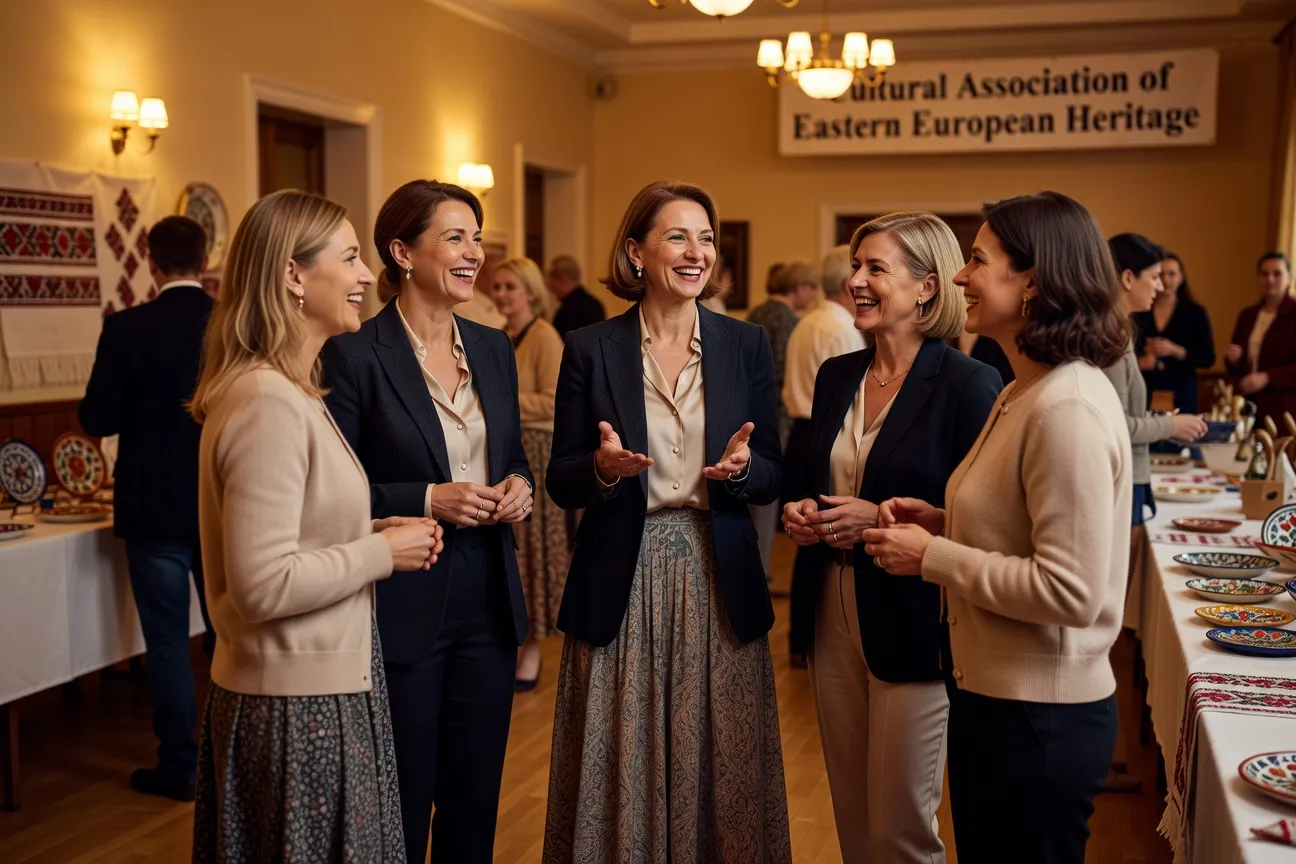
Offline cultural associations remain the most reliable entry point. In Paris, the Maison de la Russie and the smaller Franco-Russian friendship circles host film screenings and book launches that draw consistent female attendance. Toronto’s Russian Canadian Cultural Centre organises quarterly charity galas where seating is deliberately mixed. These events operate on predictable calendars published three months in advance, allowing a visitor to plan attendance without cold-calling organisers. Online, specialised platforms that cater explicitly to diaspora residents rather than Russia-based users have gained traction. The best Russian dating platforms in 2026 now include location filters that isolate women holding European or Canadian residence permits. Niche Facebook groups limited to verified members—such as “Russians in Berlin 30+” or “Russian Professionals in Toronto”—require passport or residence-card verification before admission, reducing casual tourism. Professional networking events organised by chambers of commerce also function as indirect meeting venues. Russian-speaking women frequently attend French-German economic forums or Canadian tech meet-ups to expand client bases; shared professional interests provide a low-pressure conversation starter.
Advantages of Meeting a Russian Woman Already in Europe
The most immediate advantage is the absence of visa-related timing pressure. A first meeting in Lyon or Vancouver can extend into a weekend without the logistical overhead of coordinating K-1 or Schengen invitation letters. Legal residency also means the woman already possesses a local bank account, health insurance, and tax identification number—practical matters that surface early in any serious relationship. Integration experience further reduces cultural translation work. Women who have renewed residence permits or navigated municipal childcare waiting lists demonstrate familiarity with European administrative rhythms. This familiarity translates into realistic expectations about work-life balance and holiday planning, topics that sometimes require extended explanation when dating someone still living in Russia. Established CQMI — specialist in Franco-Russian marriage since 2010 networks frequently note that couples formed inside the diaspora report fewer bureaucratic surprises during the first year of cohabitation. A 38-year-old Canadian engineer who met his partner at a 2024 Toronto tech mixer described how she already understood the province’s tax filing deadlines, allowing them to focus on relationship milestones rather than paperwork. In a separate Paris case, a French architect recounted that his partner’s prior experience renewing a multi-year residence card meant they could discuss moving in together after only eight weeks without first addressing immigration paperwork.
Points of Caution: Complexity You Should Know Before Engaging
Residence status is not uniform. Some women hold temporary protection certificates that expire after two or three years, while others possess long-term EU Blue Cards. Any discussion of relocation or marriage must account for these timelines. In addition, many diaspora women maintain financial obligations to family members still in Russia; remittances can represent 20 to 35 percent of monthly income and affect budgeting conversations. Social reputation within tight-knit communities also matters. A public disagreement at a cultural association event can circulate quickly through private Telegram channels, influencing subsequent invitations. Discretion during the first three or four meetings is therefore advisable. Finally, the presence of children from previous relationships is statistically higher than among Russia-based peers; custody arrangements often involve Russian courts and require advance legal consultation. One Berlin family lawyer recounted a 2025 case in which a German client had to coordinate with Russian authorities for six months before a custody modification was finalised. A comparable situation arose in Vancouver when a local businessman consulted an immigration solicitor for nine weeks to clarify cross-border child-support obligations before proposing marriage.
Practical First Contact Advice Adapted to Diaspora Context
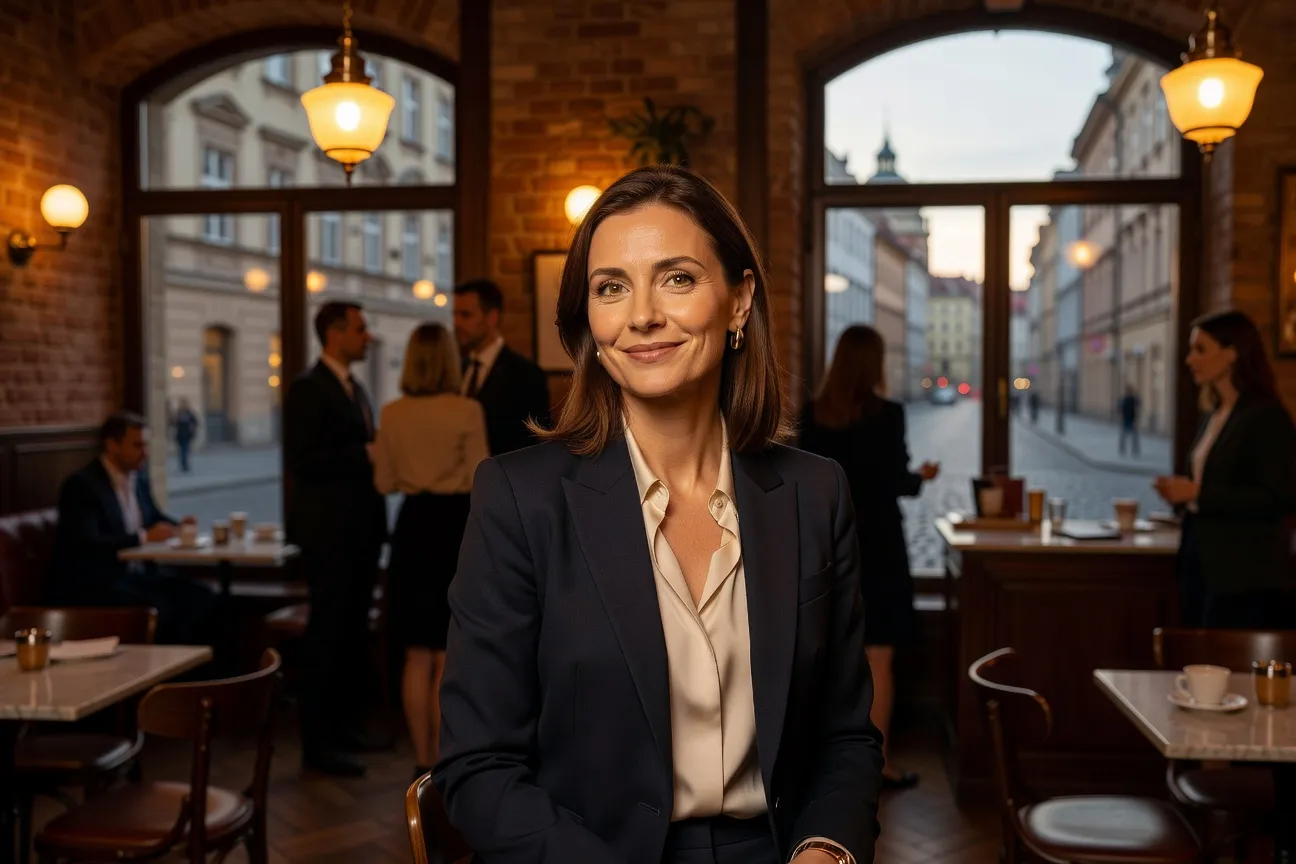
Begin with a low-stakes, location-specific reference rather than a generic compliment. Mentioning a recent exhibition at the Centre Pompidou or a new transit line in Toronto signals that you follow local life rather than viewing the woman as an exotic import. Follow up within 48 hours with a concrete suggestion—such as a weekday coffee near her workplace—rather than an open-ended “let’s meet sometime.” This respects the tighter schedules many diaspora women maintain while building additional income streams. If the conversation moves online first, reference a shared professional interest or a neighbourhood landmark instead of immediately shifting to personal history. Once an in-person meeting is scheduled, arrive five minutes early; punctuality remains a strong positive signal even among women who have lived abroad for several years. The Russian marriage agency guide for 2026 recommends documenting consent for any shared photographs at diaspora events, a practice that protects both parties from unintended circulation within closed community groups. When language differences arise, default to English or French rather than attempting Russian unless you have genuine fluency. Many diaspora women appreciate the effort but prefer clear communication over imperfect attempts that slow conversation. If the relationship progresses, discuss residence-permit timelines openly within the first month; transparency here prevents later misunderstandings about long-term intentions. Prospective partners are also advised to consult resources such as spotting fake Russian bride profiles before committing to any financial arrangements, especially when community networks overlap with online introductions. Additional support can be found through Franco-Ukrainian and Franco-Russian introductions in France, which maintains updated lists of verified diaspora events across multiple cities.
Frequently Asked Questions
Is it easier to date a Russian woman in Europe than in Russia?
In many practical ways, yes. No visa barrier for first meetings, communication is easier (many diaspora women speak fluent French, German, or English), and the logistics of developing a relationship are manageable without expensive intercontinental travel. The emotional complexity, however, remains similar — diaspora women carry the same cultural values as women in Russia.
How has the post-2022 Russian diaspora changed the matchmaking landscape?
Significantly. The diaspora grew by an estimated 400,000-700,000 Russian women in Europe since early 2022, concentrated in Germany, France, Georgia, Armenia, and the Baltic states. Many of these women are educated professionals (IT, medicine, finance) who are now open to long-term relationships with Western men in ways that were less common before.
Are diaspora Russian women different from those still in Russia?
Yes, in important ways. Diaspora women have typically navigated administrative complexity (permits, banking, integration) and are often more flexible on cultural differences. They may be more politically aware, more critical of Russia's political situation, and more accustomed to intercultural communication. However, their core family values — loyalty, domesticity, directness in relationships — remain largely intact.
What French or German cities have the largest Russian diaspora communities?
In France: Paris (est. 70,000-100,000 Russian speakers), Nice (significant community on the Côte d'Azur), Strasbourg, and Lyon. In Germany: Berlin leads with over 200,000 Russian speakers, followed by Munich and Hamburg. These communities gather around Orthodox churches, Russian cultural associations, language schools, and specific neighborhoods.
Is a specialized agency better than a general dating app for meeting diaspora Russian women?
For serious intentions (marriage), a specialized agency is more efficient. Diaspora-focused agencies like CQMI have already identified and pre-qualified women who are genuinely open to an intercultural marriage rather than casual contact. General apps have larger volume but far lower conversion rates for serious matches, and the diaspora segment is difficult to filter reliably.