 EN
EN ES
ES FR
FR RU
RU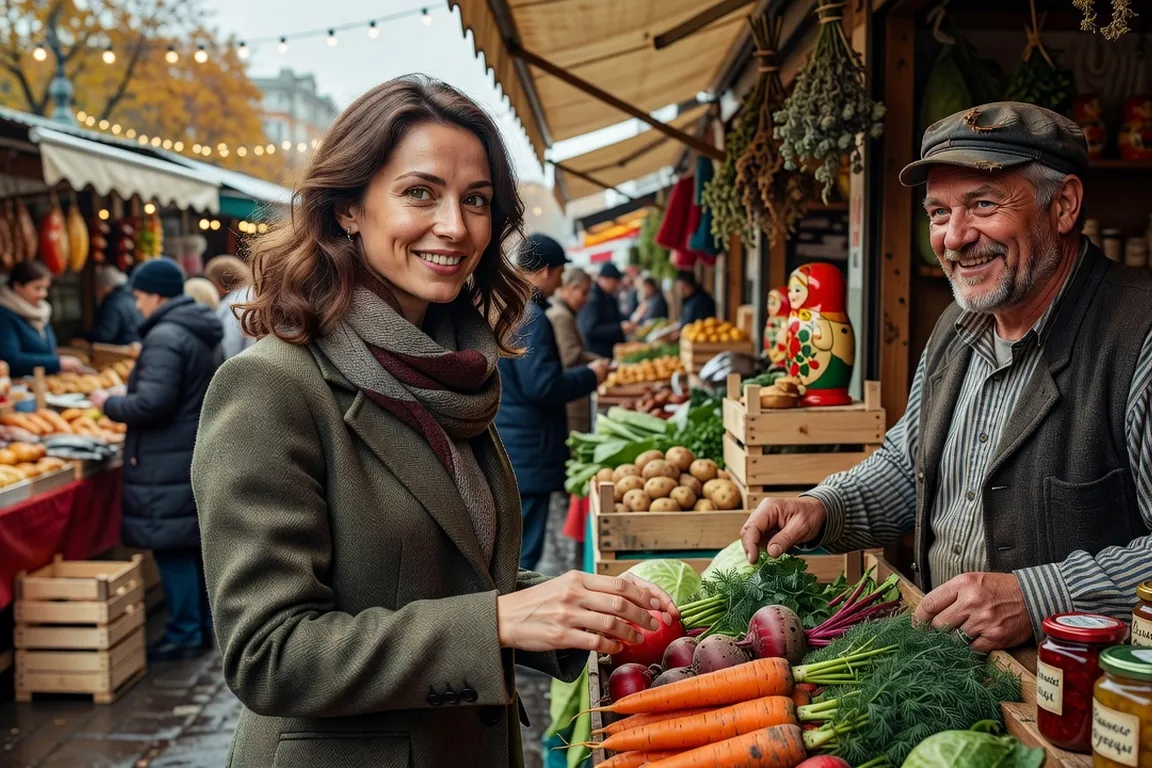
Introduction
Marc Antoine, a Paris-based journalist, explores the unique experience of Claire Dubois, a French expatriate who has lived in Moscow since 2021. Married to a Russian engineer, Claire shares her daily adventures and challenges — from language learning to cross-cultural family management and raising bilingual children. This interview offers an in-depth look at the life of an expat wife in Russia, with candid anecdotes and practical advice for anyone considering a similar move.
Q1-Q10 Interview Body
Marc Antoine: Claire, what were the biggest challenges you faced when you first settled in Moscow?
Claire Dubois: Honestly, the first year was rough. Adapting to a new culture and such a different climate isn’t simple. For example, the Russian winter can be intense, and nobody really warned me about that. Temperatures can drop to -30 degrees Celsius, and you have to get used to very short daylight hours in winter. On top of that, understanding the Russian bureaucratic system was a real headache. I had to learn to navigate the administrative maze, which took time — my first residency renewal alone required four separate office visits and four different sets of notarized translations. One thing that helped was reading articles like life after marrying a Russian woman, which offer realistic perspectives and useful advice. Understanding cultural differences, for instance in professional interactions, was also essential to avoid misunderstandings — Russian colleagues expect much more directness in meetings than I was used to in Paris, and it took me months to stop reading that directness as rudeness. I also learned to appreciate the cultural richness of Russia by taking part in local events and discovering Russian traditions, which helped me feel more integrated. For example, I attended a Maslenitsa festival, an unforgettable experience where I tasted homemade blini and joined in traditional dances around a bonfire with people I’d never met before.
Marc Antoine: How did you approach learning Russian? Do you think it’s essential?
Claire Dubois: Learning Russian was non-negotiable for me. Even though many Muscovites speak English, understanding and speaking Russian makes daily life so much easier. I took intensive classes as soon as I arrived — four hours a day, five days a week, for the first three months. That let me not only understand people better but also integrate more easily into the local community. Here’s a concrete example: being able to read metro signs and understand station announcements cut my daily stress dramatically. That said, it’s not strictly necessary if you live in cities like Moscow or Saint Petersburg, where many services are available in English. But learning Russian also opened up interesting professional opportunities and helped me better understand Russian culture and history. In 2022, I managed to hold an entire conversation in Russian with a colleague, which felt like a real milestone for me. In the long run, it also allowed me to take part in professional training sessions conducted in Russian, broadening both my skills and my network. Looking back, I’d tell any newly arrived spouse: don’t wait until you feel “ready” to start speaking — mistakes are how you actually learn the rhythm of the language.
Marc Antoine: Did you find it difficult to make friends in Russia?
Claire Dubois: At first, it was a bit intimidating. Russians can seem distant at first glance, but once the ice is broken, they’re incredibly hospitable. To build connections, I joined local clubs and took part in community activities. I met many other expats, which helped me build a support network. Taking part in events organized by matchmaking agencies, like the regional matchmaking agency network in France, can be a good way to meet people who share similar interests and cross-cultural experiences. I also discovered that Russians place enormous value on family and friendship bonds, which allowed me to build deep, lasting relationships rather than the more surface-level acquaintances I was used to back home. Once, at a birthday party, a Russian friend introduced me to her entire extended family — grandparents, cousins, everyone — which touched me deeply and made me realize how quickly you can be folded into someone’s inner circle here. These interactions helped me understand the importance of interpersonal relationships in Russia, which has genuinely enriched my experience as an expat.
Marc Antoine: What aspects of daily life in Russia surprised you the most?
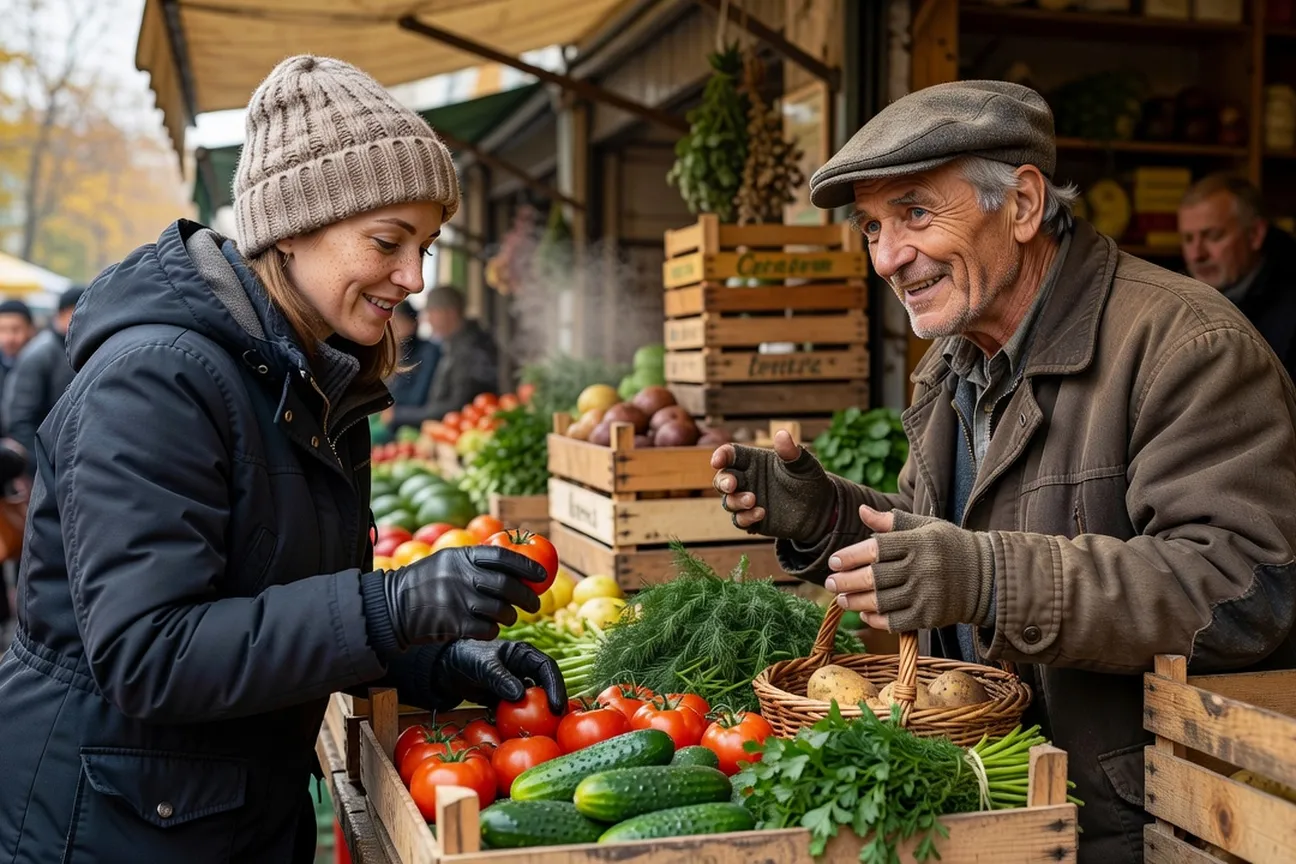
Claire Dubois: What surprised me most was the efficiency of digital public services. For example, the apps for paying bills or booking medical appointments are extremely well designed, which makes daily life much easier — I can book a doctor’s appointment, pay a parking fine, and renew a document all from the same government app in under five minutes. Understanding the culture of gift-giving and hospitality was also surprising. Russians are extremely generous and welcoming once you’re part of their circle. Another unexpected aspect was how Russian women manage their financial independence, as mentioned in Russian women’s financial independence in 2026 — many of my Russian friends run their own small businesses alongside full-time jobs. I was also struck by how quickly Russians adopted new technologies, like contactless payments. I was genuinely surprised to see how common mobile payments are here, more so than in France when I left. The way Russians blend modern and traditional customs during celebrations also fascinated me, like during New Year celebrations when fireworks light up the Moscow skyline for what feels like hours, and every courtyard has its own impromptu gathering with mulled wine and sparklers.
Marc Antoine: How do you manage your children’s education in a bilingual environment?
Claire Dubois: Raising bilingual children is a challenge, but also a huge opportunity. We chose a school that offers a French-Russian bilingual program. At home, we mostly speak French, but we work Russian into games and reading time. The kids adapt surprisingly well and enjoy being able to communicate in both languages. According to research, bilingual children develop stronger cognitive skills, which is a long-term advantage. They also get to grow up with a deeper understanding of two distinct cultures, which will strengthen their resilience and adaptability as adults. In 2023, our son won a school prize for an essay written in Russian, which made us incredibly proud — he’d only been writing in Cyrillic for two years at that point. We’ve also noticed that this bilingual education has allowed them to build friendships with children from diverse cultural backgrounds, enriching their social and emotional experience in ways a monolingual upbringing simply wouldn’t have.
Marc Antoine: Do you have any advice for other expat wives considering a move to Russia?
Claire Dubois: I’d say preparation is key. Learn as much as you can about local life and customs before you move. Make sure you have adequate health coverage; medical insurance for foreign citizens in Russia is a good resource for understanding your options. Finally, stay open-minded and ready to embrace cultural differences. That will make the experience far more rewarding. Investing time in learning the language and culture will also help you avoid common pitfalls and feel more comfortable in your new life. For example, taking Russian cooking classes helped me integrate better and discover local specialties — I still make my mother-in-law’s borscht recipe every winter. I also found it useful to attend cultural exhibitions and performances, which gave me a deep appreciation for Russian arts, from Bolshoi ballet to contemporary Moscow theater.
Marc Antoine: How do you handle cultural differences within your marriage?
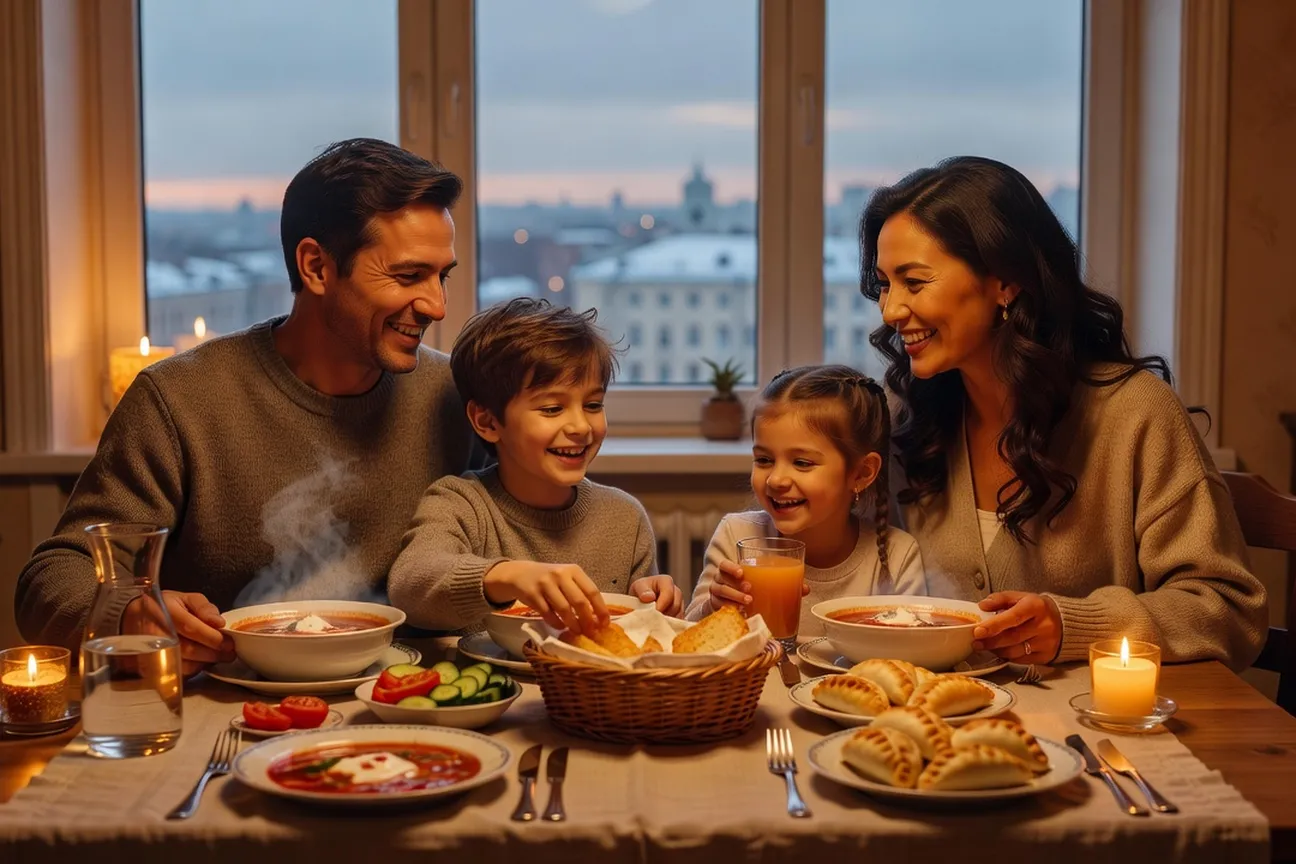
Claire Dubois: Cultural differences can sometimes create misunderstandings. However, we’ve learned to see them as opportunities for growth. We have open discussions about our expectations and values. For example, celebrating both French and Russian traditions enriches our family life. For anyone interested in the legal side of things, this lawyer interview on residency rights is very informative. We’ve also found that sharing our respective traditions makes special occasions more meaningful and creates common ground for the whole family. One year, we hosted a French-Russian Christmas, combining dishes and traditions from both cultures — bûche de Noël sitting right next to olivier salad on the same table. We’ve even created our own family traditions, blending elements of both cultures, which has strengthened our bond and mutual understanding in ways neither culture alone would have.
Marc Antoine: What advice would you give on managing finances in an intercultural family?
Claire Dubois: Transparency is essential. We keep a shared budget and regularly discuss our financial goals. It’s important to understand the differences between the French and Russian banking systems. For example, tax management can be complex, so having a financial advisor is a real asset. Finally, being informed about Russian women’s financial independence, as covered in Russian women’s financial independence in 2026, can offer useful perspective. Openly discussing financial expectations and priorities helps avoid conflict and build a solid foundation for the future. We’ve also set up an emergency fund to handle the unexpected, which has given us real peace of mind. On top of that, we’ve adopted a diversified investment approach that blends French and Russian strategies, which has strengthened our overall financial security and given us options no matter which country we end up settling in long-term.
Marc Antoine: Do you feel well integrated into Russian society after five years?
Claire Dubois: Yes, I feel much more integrated now. At first, I felt like an outsider, but by taking part in local life and building friendships, I found my place. I think living in Russia has made me more resilient and open-minded. For anyone wondering where to meet Russian women, top 12 Russian cities to meet your future wife can be a useful resource. Sharing moments with Russian friends and taking part in local celebrations has helped me better understand and appreciate Russian culture, enriching my experience as an expat. I also joined a French-Russian association that organizes cultural events, which has strengthened my ties to the community. These initiatives have let me contribute to community projects, reinforcing my sense of belonging in a country that, five years ago, felt entirely foreign to me.
Marc Antoine: What are your future plans in Russia?
Claire Dubois: We’re planning to stay in Moscow for a few more years. I want to deepen my knowledge of Russian and maybe go back to school. We’d also like to travel more across this vast country to discover its many regions and cultures. We’ll keep blending both cultures in our family life, which is an exciting ongoing project. Visiting cities like Saint Petersburg, Kazan, and Vladivostok is part of our future plans, since each region has its own charm and unique traditions. We’re also planning to ride the Trans-Siberian railway, an experience we think will be unforgettable — we’re eyeing the Moscow-to-Irkutsk stretch first, with a stop at Lake Baikal. I’m also interested in getting involved in cultural and educational projects, which could open up new professional and personal opportunities down the road.
Marc Antoine: Looking back, is there anything you wish someone had told you before your very first winter in Moscow?
Claire Dubois: So many things, honestly. Nobody warned me how much the lack of daylight affects your mood — by late December, the sun barely clears the rooftops before it starts setting again, and you can go through an entire workday without seeing direct sunlight. I’d tell any new arrival to invest in a proper daylight lamp before winter hits, not after, because by the time you notice you’re struggling, you’re already exhausted. I’d also say: buy real winter boots, not the ones that look good but leave your feet frozen after ten minutes outside. My first pair lasted exactly one walk to the metro. And practically speaking, learn how the heating system works in your building before the first cold snap — Moscow apartments run on centralized city heating that switches on and off on a fixed municipal schedule, not on your own thermostat, which surprised me completely the first October when it stayed unexpectedly cold indoors for almost two weeks before the heat came on.
Marc Antoine: How has your relationship with your in-laws evolved over the years?
Claire Dubois: That’s actually one of the most rewarding parts of this whole experience. In the beginning, there was a language barrier and a fair amount of mutual shyness — my mother-in-law and I basically communicated through my husband for the first several months, which felt awkward for everyone. But as my Russian improved, things changed completely. Now we cook together most Sundays, and she’s taught me recipes that have become part of our own family’s weekly rotation — pelmeni from scratch, a proper solyanka, her particular way of pickling cucumbers that she insists is better than anyone else’s in the building. Russian families tend to be very involved in day-to-day life once you’re accepted, more than what I was used to in France. My in-laws help with childcare regularly, they show up unannounced with groceries “just in case,” and honestly I’ve come to see that closeness as a gift rather than an intrusion, even though it took real adjustment at first.
5 Quick Questions
Marc Antoine: Is Russia a safe country to raise children in? Claire Dubois: True. Overall, safety is good, especially in major cities.
Marc Antoine: Is it easy to find French products in Moscow? Claire Dubois: False. Some products are available, but at high prices.
Marc Antoine: Is life in Moscow expensive? Claire Dubois: True. Cost of living can be high, especially for housing.
Marc Antoine: Is the Russian education system high quality? Claire Dubois: True, especially in international schools.
Marc Antoine: Is Russian bureaucracy difficult to deal with? Claire Dubois: True. It can be complex and frustrating.
Final Advice
- Learn the basics of Russian. It will greatly ease your integration and help you better understand local culture.
- Get involved in the community. Joining local clubs and groups can help you make friends and feel at home.
- Be patient and flexible. Adaptation takes time, and it’s important to stay open to new experiences and perspectives.
To go deeper into the psychology of intercultural relationships, see relationship psychology insights for cross-cultural couples.
Frequently Asked Questions
How long does it take to adapt to daily life in Russia as a foreign spouse?
Most expat spouses report a genuine adaptation curve of 18 to 36 months. The first six months are typically the hardest, dominated by language barriers and bureaucratic friction, while years two and three bring a more settled routine and a wider social circle.
Is learning Russian necessary to adapt as an expat wife or husband?
Not strictly necessary for survival in Moscow or Saint Petersburg, where many services operate in English, but essential for genuine integration. Expats who reach a conversational level within the first two years report far stronger relationships with in-laws and neighbors than those who rely solely on translation apps.
What surprises foreign spouses most about daily life in Russia?
The efficiency of digital public services, the depth of hospitality once trust is established, and the cost-effectiveness of everyday life outside central Moscow are the three most commonly cited positive surprises among expat spouses in recent surveys.
How do mixed couples handle cultural differences in daily routines?
Successful mixed couples tend to negotiate explicit compromises rather than assuming shared expectations — around guest hospitality, family involvement, and household roles. Couples who discuss these differences openly in the first year report significantly less friction later.
Does raising bilingual children add stress to adapting in Russia?
It adds complexity but is widely described as a stabilizing long-term project rather than a source of ongoing stress. Most expat parents settle into a consistent one-parent-one-language approach within the first two years of a child's life.